Dispatch No. 2
It’s strange, when traveling, to be wrestling with thoughts of stagnation. Travel, even slow travel, centers on movement and the thrills that come with it—discovery, adventure, novelty. We travelers tend to focus on what we’re moving toward. But we don’t often think of what we’re moving from, what we’re leaving behind, or the parts of us that have not been moving with us on our journeys. In short, what is stagnating. This week, though, is different. So this dispatch is about stagnation.
These thoughts are coming to me in Guanajuato, Mexico, where I have been in a very comfortable housesit for the past two weeks. Guanajuato’s not what’s bringing them up, though the comfortable housesit is giving me space to let them up.
This week, Wendell Berry died. A poet, novelist, farmer, cultural critic, academic, environmentalist, and more, Berry was at one point in my life one of my favorite writers. Which is to say, one of the previous versions of myself had counted Berry as a favorite writer.
Through most of my twenties, at first slowly and then all at once, I went through a kind of de-conversion from Christianity. The faith I was brought up in, a strange mixture of Dutch Calvinist and American Evangelical, had started fraying as my college-age doubts grew alongside my experiences in the world. And not to put too fine a point on it, but the nails in the coffin of my childhood beliefs came from two very sudden and very personal experiences with death. By the time I was twenty-seven or so, I had lost (or not lost, consciously given up, which is very different) the foundations I’d stood on for most of my previous life.
At that time, many of my friends and members of my larger community were going through their own versions of that. And many of them were getting involved in local food movements, from small-scale organic farm, to neighborhood co-op, to prestigious gourmet restaurant. It was around that time that I first read Wendell Berry’s poem Manifesto: The Mad Farmer Liberation Front. I re-read it this week, for the first time in a while, amid my scrolling through social-media tributes to Berry by friends and strangers alike. Here’s an excerpt:
Ask the questions that have no answers.
Invest in the millenium. Plant sequoias.
Say that your main crop is the forest
that you did not plant,
that you will not live to harvest.
Say that the leaves are harvested
when they have rotted into mold.
Call that profit. Prophesy such returns.
Put your faith in the two inches of humus
that will build under the trees
every thousand years.
Listen to carrion - put your ear
close, and hear the faint chattering
of the songs that are to come.
Expect the end of the world. Laugh.
Laughter is immeasurable. Be joyful
though you have considered all the facts.
The whole thing is worth a read, and although there are shadows in it of the Christian faith and culture I walked away from, there are also some pretty hard anti-capitalist punches that I think were formative for me. But the main lines that spoke to me then were those above. Finding myself without a footing, those two inches of humus seemed like a good a place as any to try and stand. So in my late twenties, and continuing well on into my thirties, I became first a gardener, then a part-time farmer, then full-time, and after that, a permaculturalist.
(Incidentally, I bought my first typewriter around the same time. Whether such a purchase was directly inspired by him or merely correlated, I can’t remember. I am drafting this dispatch on my fourth typewriter, and that first one is still in my possession, stored away in an attic in Michgan, along with some of Wendell Berry’s books.)
I've made this week's Dispatch available for all to see. Subscribers get one about once a week straight to their email box. And subscriptions are free (although paying me is an option)! Sign up here if you haven't already:
It turned out that I didn’t have the fanatical devotion to geographical stability that being a land-steward of Berry’s ilk required. The soil was a lifeline, though, when I needed it, and having planted my life in it, I find myself still nourished by it well into my forties, though I have since uprooted myself from one particular place.
And yet, reading these lines now as I grieve their writer who I once loved, I am realizing how narrowly I took Berry’s words at the time. Grief is, of course, not really for the dead, but for we living who survive them.
I don’t think much about the self I was before, or even during, my discovery of Berry’s writing. I don’t like to. There is shame surrounding that self. The simplistic beliefs, the hurtful dogmas, the twisting of love. And later as that self moved away from those beliefs, the mess of living without them, the pain of self-discovery, the wounds inflicted on others and myself by flailing about unmoored. That past me is dead, which I am grateful for. Although Berry’s death has me realizing that I have not properly grieved that past self, nor given him a proper burial.
I imagine that what I mean by ‘a proper burial’ is something like what Wendell Berry would have wanted for himself. I’m sure he has stipulated in some legally-binding document that he is to be laid to rest somewhere on or near his farm in Port Royal, Kentucky, and that he should be interred in such a way that allows that chattering of the songs to come access to his carrion. He would want to nourish that same humus he put his faith in with his own death.
And today I think maybe Berry wasn’t just putting his faith in the soil because it would nurture the life of the land, the growth of the trees, the health of the community, once he was gone. I think he was also putting his faith in the idea that death is an integral part of that process. That the carrion can be composted. That the breaking down of tragedy over time leads to that future nourishment, future growth, future life—if we leave the tragedy open to the elements.
That is what I think ‘properly grieving’ is like, also: the processes by which we open tragedy to the elements so that it can begin composting. And that, I am seeing this week, is what I have not done for my past self. This is the stagnation I wrote of feeling, here in Guanajuato, at the beginning of this dispatch. I am sensing the stench of it below me, embalmed and entombed, nourishing nothing.
I am no longer a farmer (although my former mentor Jeff would say ‘once a farmer, always a farmer); these days I am a writer and an artist as much as I am anything. I have lately been focused on becoming a better writer and artist, and it seems that airing out that stagnating corpse has become a necessary step in that process. Today I am feeling the need to let that past self breathe, to open the lid on his coffin to the elements so that he can decompose and nourish what has already been growing from him.
We used to make compost on the farm, turning piles of dead leaves, food scraps, and manure in order to let oxygen through to the bacteria that did the work of breaking them down. This bacteria would transform the compost from death to life. And once the composting process was finished, we would take some of the now-living matter and add it to fresh piles of the dead, inoculating the dead with the living bacteria so that the process could continue.
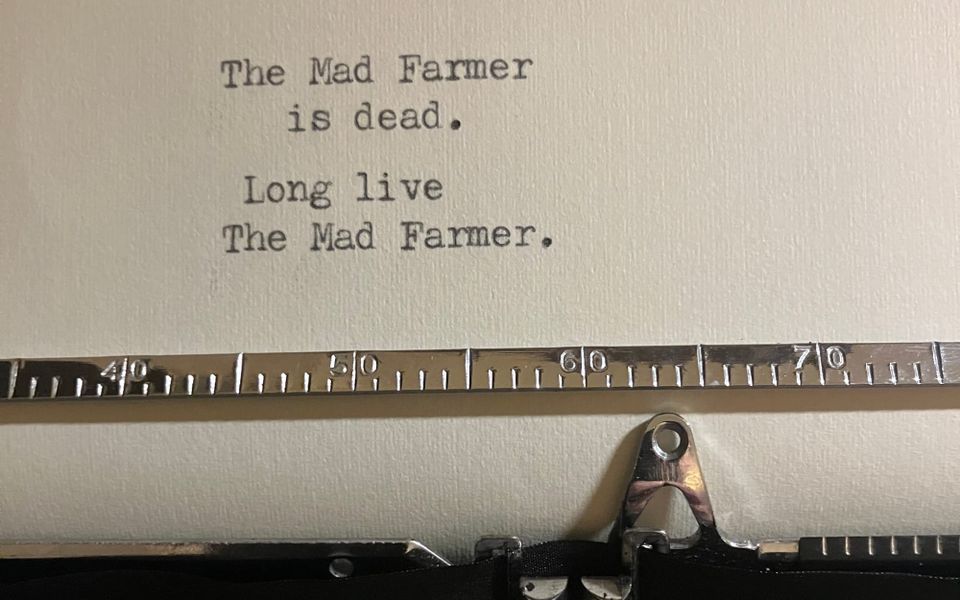
My grief for Wendell Berry is, in that way, inoculating a grief for my past self. I feel that coffin underneath me opening a bit, and through the crack in the lid the bacteria that was once the Mad Farmer is slowly crawling. We shall see what life it ends up making. Still, I think he would have liked that idea.
The ending of Berry’s Manifesto bothered me at the time I first read it, and long after. It smacked too much of Christian dogma to be anything but distracting for me at the time. But in the light of this idea of grief inoculating grief, of composting the dead to bring new life, I am seeing it differently. Perhaps there’s something beyond the dogma to be learned from it. The last line of the poem says, simply:
Practice resurrection.
Now, a quick roundup of the past week's blog posts! I wrote about finding a cheap journal at a souvenir stall in Guanajuato's biggest market and making a day of filling it:
 The Analog Nomad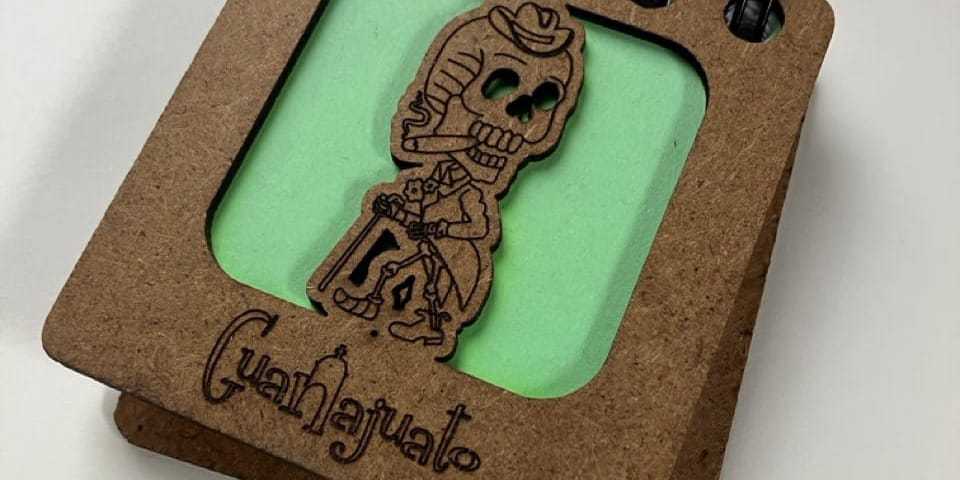
And, in anticipation of Worldwide Half-Frame Photography Day (September 5), I wrote a review of the plastic-fantastic half-frame camera I've been carrying around on my travels:
 The Analog Nomad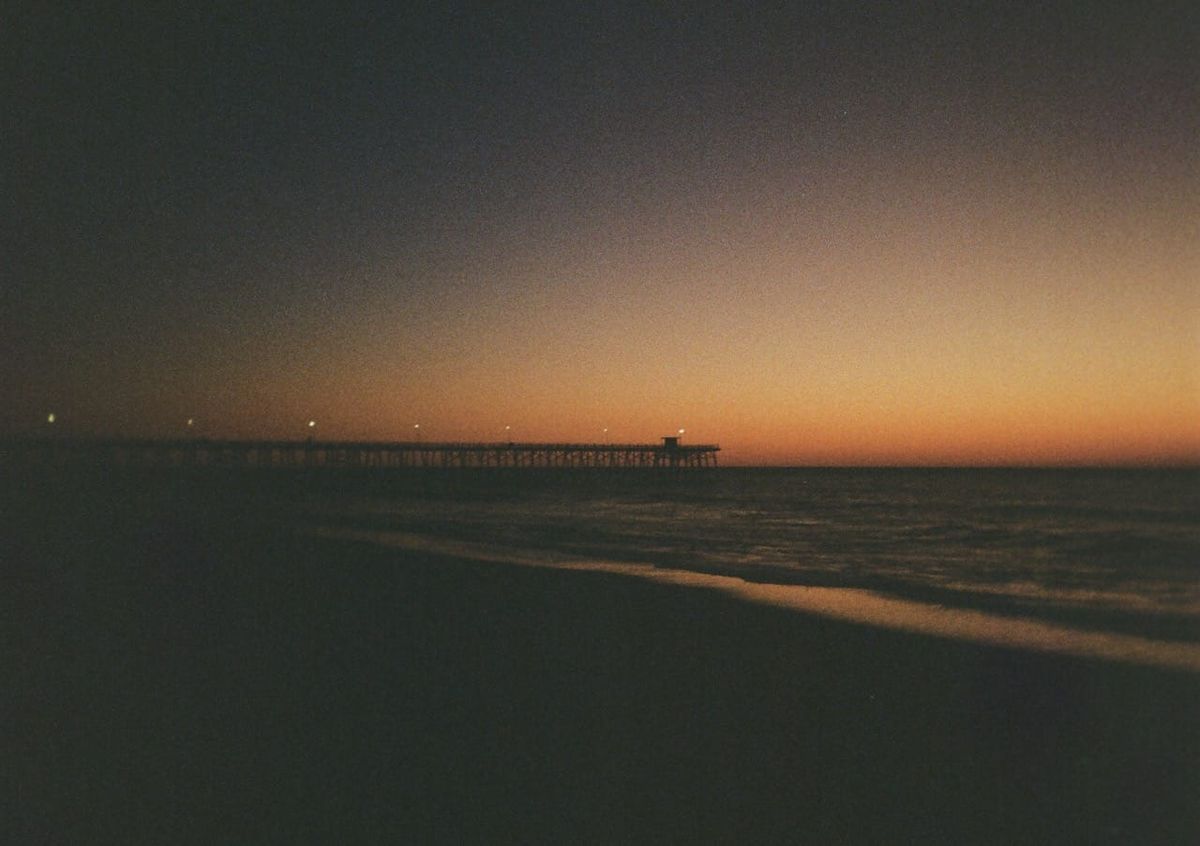
I'll be leaning into this half-frame thing over the next week or so, with some posts featuring my half-frame photography from a cross-USA road trip earlier this summer. And, I wrote the little typed poem in the picture at the top as a reaction to Berry’s death. The substance of this dispatch I wrote as a response to his death. That distinction, between reaction and response, is something I’ve been thinking a lot about during my current journey, and I am planting the seed of it here because it may well sprout in later dispatches.
Thanks for traveling with me,
J. Mark Tebben
The Analog Nomad
Member discussion