Horizontal Vertigo
I’ve only spent a few weeks total in Mexico City, interspersed over the past two and a half months, and those few weeks felt on the whole very chaotic. Some of that feeling came from my choice of lodging one visit, but there is something about the city itself too. I can’t claim to know much about any place after only a few weeks, let alone a city of twenty million people, but I do think that the chaos of Mexico City is a unique one, certainly of all the cities I’ve been to. It’s what that chaos is about, and where it comes from, that I don’t know.
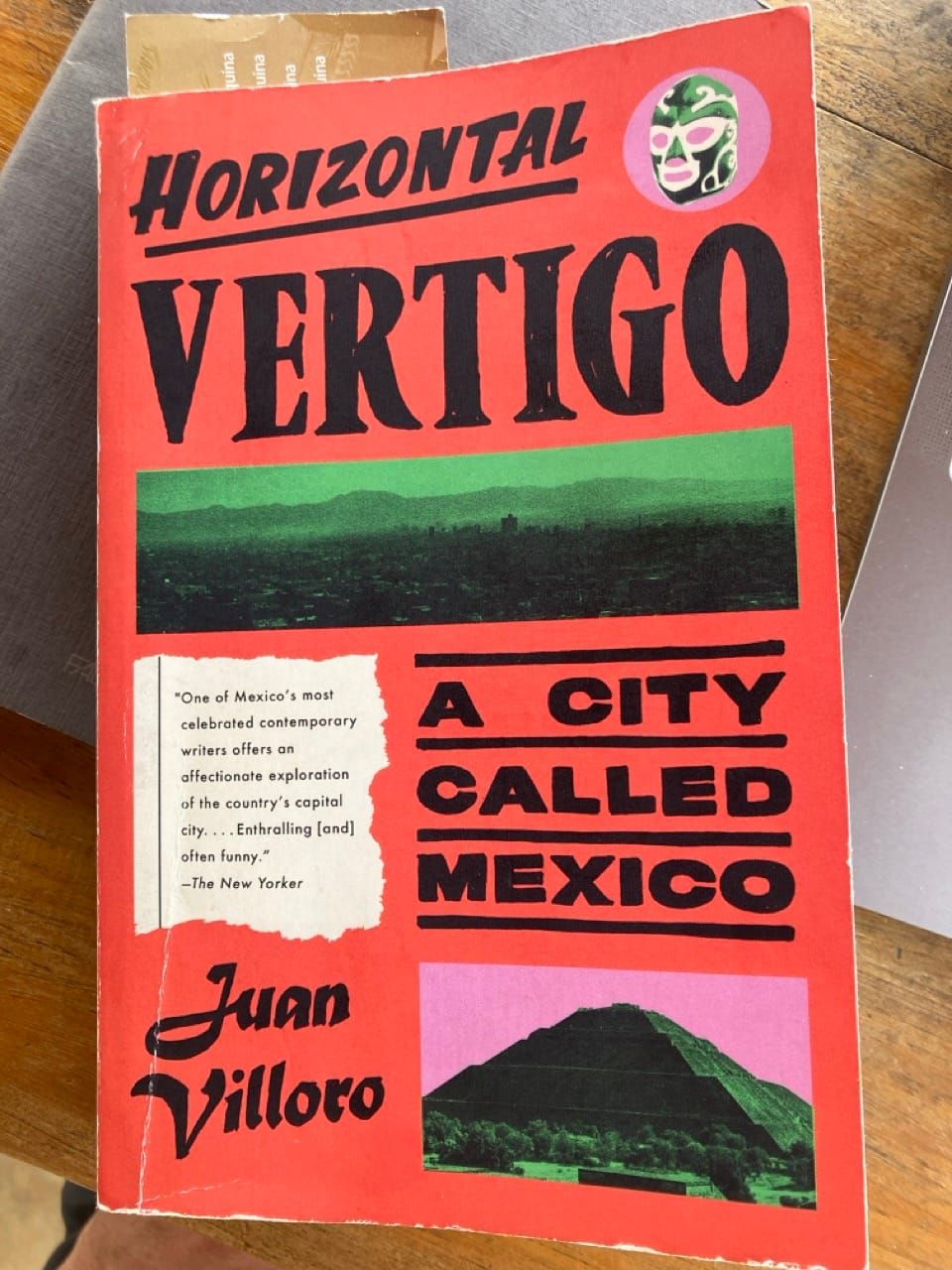
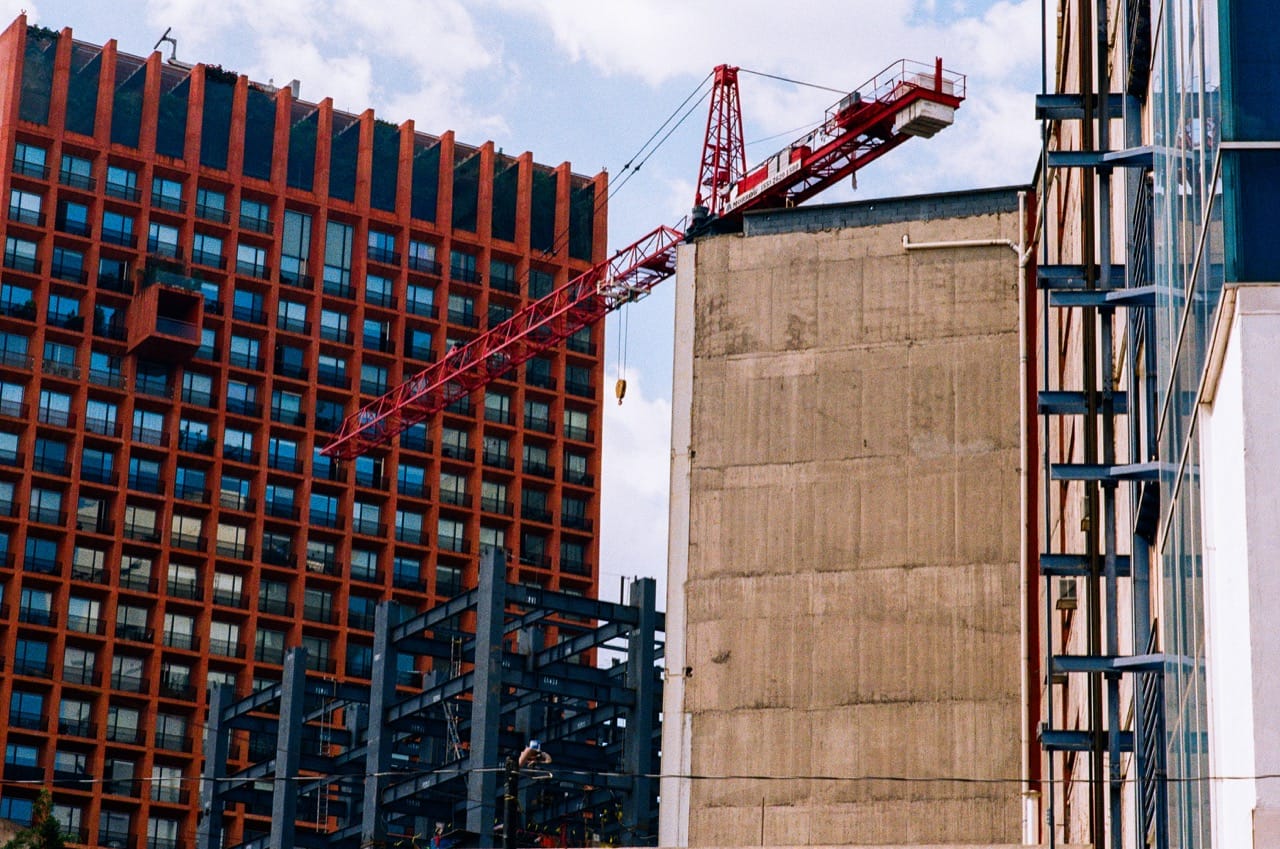
So when an acquaintance recommended Horizontal Vertigo by Juan Villoro as introductory reading for the city, I picked it up eagerly. The title alludes to the sprawl of the metropolis, where earthquakes are common and so construction tends to spread out and not up - although, as Villoro notes, that tendency has changed in recent years. “Horizontal vertigo” also begins to define the chaos I’d been sensing, which turns out is also Villoro’s intention.
As he writes in the first section of the book, the name “Mexico City” itself doesn’t even necessarily impose order on the chaos. There was once a “Federal District” that made up the core of the city (an administrative designation similar to Washington DC’s in the United States), and a State of Mexico surrounding it with its own municipalities along the District’s border - “Mexico City” used to be the informal name for the greater metropolitan area, as it were. Then the Federal District became a municipality whose official name is Mexico City, and whose administrative boundaries ended at the old federal line. So even Mexico City is not necessarily Mexico City. “Welcome to the Valley of Anáhuac,” Villoro writes, using the pre-Hispanic geographical name for the place, “where space and time converge!”
He’s also alluding to his writing style here. In that same section, he sets out a kind of a disclaimer. The book itself is comprised of dozens of chapters, each one being a kind of self-contained anecdote about the city. Villoro warns, “The episodes do not move forward in linear fashion, but, instead, follow the zigzagging of memory or the detours endemic to city traffic.” He’s structured the book in the same way the city’s structured: a bit haphazard, tenuous, chaotic. He continues, “The reader may follow from beginning to end, or choose, like a flâneur or a subway rider, the routes that interest him most: that of the characters, the places, the surprises, the ceremonies, the transitions, the personal stories…”
I chose to read it linear-fashion, one or three or more episodes in a sitting depending on their length and intensity. And there is a line, albeit a meandering, messy one through the book. It begins with Villoro’s birth in the neighborhood of Insurgentes where, like his ancestors, the street names all originated with towns in Spain. And it ends with earthquakes. In between, he tries to cover a lot of distance.
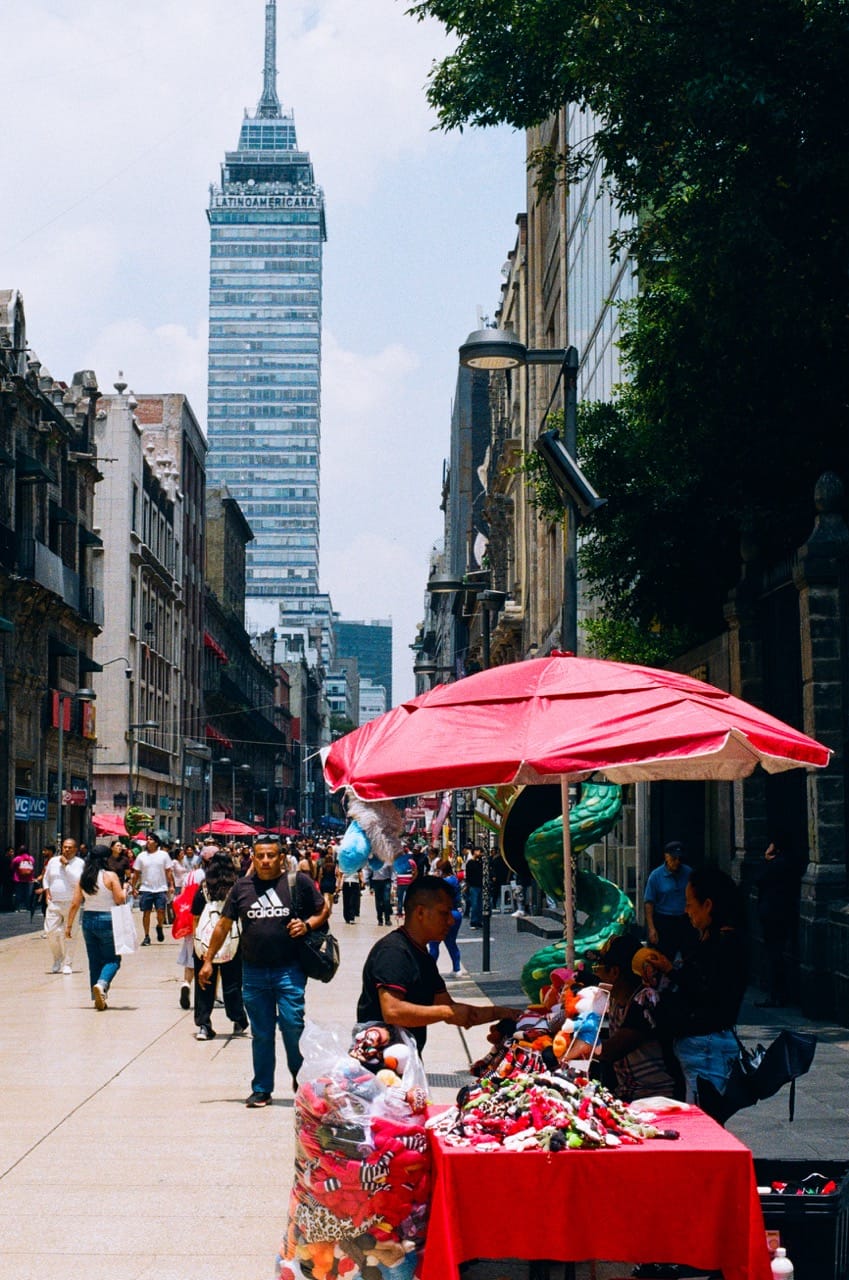
Early on (in his book if not his life), Villoro claims for himself the label of “chilango”, an originally derogatory term for people from Mexico City. The chilango takes on a kind of a narrator’s role, or at least a guide’s, in many of the anecdotes that follow. We follow the chilango through the chaoses of city traffic, governmental bureaucracy, pirated-goods marketplaces, monumental plazas and tiny cafés. The chilango has a wry sense of humor, and Villoro inhabits him in order to expose, to critique, or simply to make fun of the less-than-appealing aspects of city life, such as the use of discarded objects as ornamentation:
“The chilango fond of tossing shoes up onto electric wires is not thinking of the intrinsic beauty of his materials. On the one hand, he resembles the baroque artist who abhors a vacuum and distorts reality to its final possibilities; on the other, he resembles the postmodernist, who incorporates quotations from the past…”
Even if the chilango’s not always narrating, Villoro is. We learn some of his biography, see the city through his eyes. These episodes are often more heartfelt, more earnest. In one, he describes his experience as a teenager in compulsory military service, only a few years after 1968, when the Federal District’s military cracked down violently on a student uprising. “I knew that those arrested in 1968 ended up at Military Camp Number 1. I was expecting some sort of revelation during my time in that mansion of terror, but everything took place with monotonous normality.”
In the very same section, young soldier Juan finds himself insinuating into a poor, strange family’s quinciniera celebration and lying to a love interest about his own family background. “I wasn’t ashamed to tell lies, but I was ashamed those things weren’t the truth. I hated being the son of neurotic university people who’d separated without that fact being in any way interesting. I longed for the tumultuous life of the slum, which I had before me now.”
Villoro is one of Mexico’s most well-known contemporary writers, and he’s published novels, essays, journals, and more. Still, I’d never heard of him, so I asked a writer I know in Mexico City what he thought of Villoro The writer dismissed him by calling him a “nepo baby.” Villoro’s grandfather was a wealthy Spanish immigrant, and his father, born in Barcelona, became a prestigious philosopher and academic in Mexico City, as well as a Mexican delegate to UNESCO. And his mother had a doctorate in psychology.
So Juan certainly came from a place of privilege. He’s writing from one as well in this book. I think that’s where my writer-friend’s dismissal is rooted: Villoro’s writing about a people without necessarily sharing their lived experience.
I think Villoro knows this, and is at least to a certain extent uncomfortable with it. The passage quoted above, where young soldier Juan lies about being poor reads as a confessional not just in the moment of the narrative, but for the book itself. I think. I don’t actually know much about Villoro, after all. I’m also not sure that writing from privilege requires a confessional. But it does require awareness.
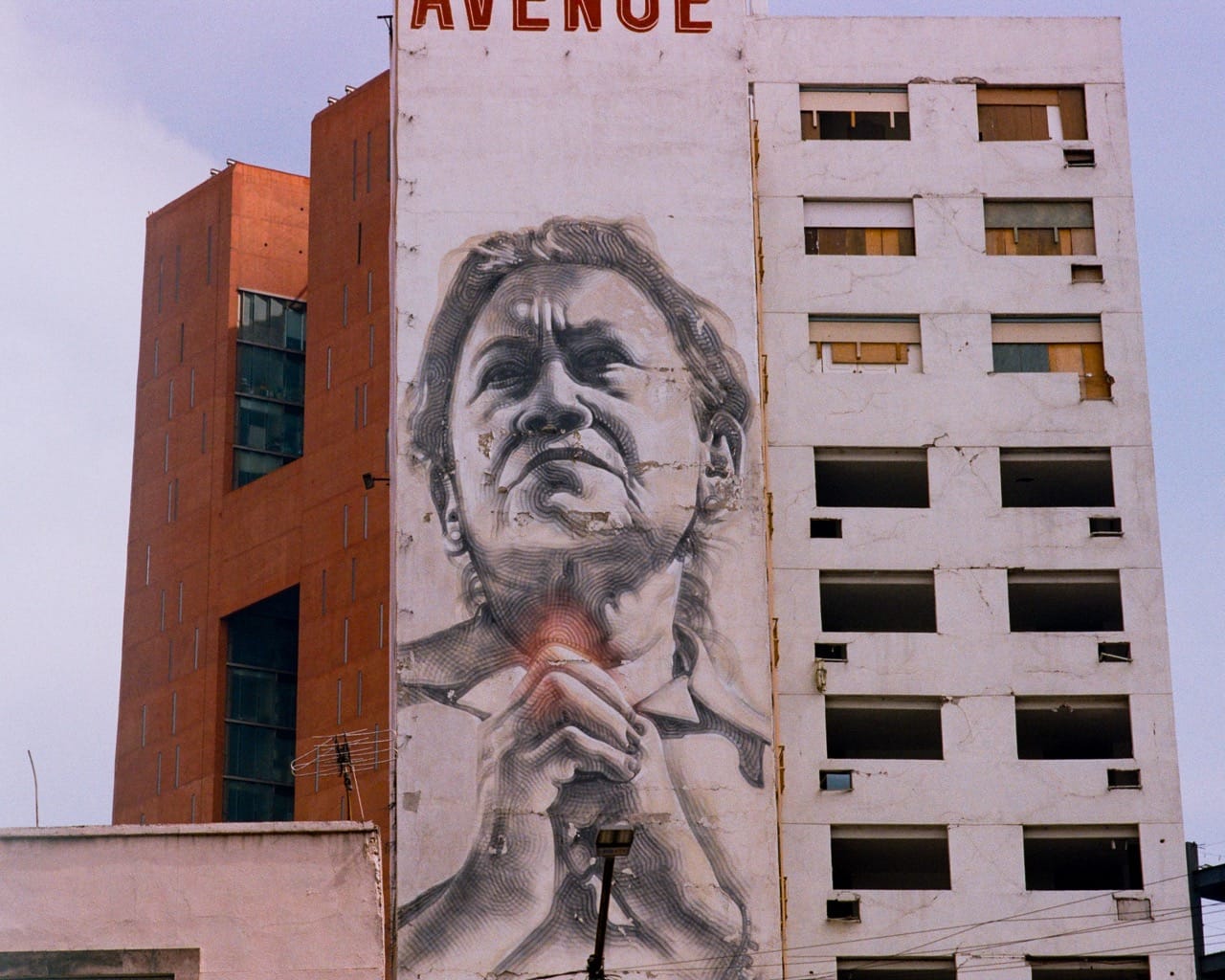
I also come from a background of some privilege. White man in the United States certainly, and I had a comfortable upbringing. I bristle a bit at the thought that my privilege disqualifies me from writing about the larger, or even the smaller, inequalities and injustices I’ve become aware of. It limits my perspective, certainly, but to what extent should it limit my scope?
This is a question I haven’t answered for myself, although I keep asking it. My first reaction, once I was made aware of my privileges as such and the problems surrounding them, was guilt; with that guilt, shame; from that shame, silence. And the silence was good for me, even though the guilt and the shame weren’t. The silence gave me space to listen and to learn. What social, economic, political choices led to the privileges I had? What consequences arose from them? Who’s devalued when I’m valued? What changes would mitigate, reverse, reconcile the harms done by them? And at what point can I move out of that silence, and how?
I don’t know to what extent Villoro has asked himself these questions, but I get the impression that he has at least a bit. The book ends with his personal narratives of Mexico City’s major contemporary earthquakes, in 1985 and 2017. In that section, he doesn’t shy from calling out elite corruption that led to so many building collapses during the first quake, and the wording he uses (at least how it reads in translation) suggests he’s no stranger to observing deep systemic problems: “The earthquake of 1985 revealed the graft which had allowed schools, hospitals, and apartment buildings to be built using government money but without watching over the foundations. The most import of a public building is the plaque that tells who inaugurated it. What you don’t see (the structural materials) is consigned to oblivion.”
Ultimately, although it certainly lays out many of the structural materials of Mexico City itself, Horizontal Vertigo doesn’t probe too deeply into them. I don’t think that’s its place, though. It’s an overview, after all, and just as I, a single visitor, find my barrier of understanding the place at the very surface of it, Villoro perhaps finds his barrier a bit deeper, though he finds it nonetheless. The extent to which that depth is greater than mine is the extent to which I found the book interesting. I learned more about the Grito, the gordita, and much in between. Above all, it validated my initial impressions of the chaos, and I came away with a bit more understanding of what that chaos is about. Or at least what one writer thinks it’s about.
As to where it comes from, there’s not much new light there, although Villoro’s shown me some paths that, if I wanted to, I could conceivably follow in the direction of answers. If I were spending more time in the city, I would try to learn more about some of those structural problems. And I would try to learn more about Villoro himself, to see what he has done with his privileges, how he’s examined them (or not) and what (if anything) he’s doing in response.
Right now, though, I have the privilege of the traveler, and I’m choosing to limit my time in the city in favor of other places. So those questions will be replaced by other ones as I move along. Like with all privileges, there are costs, even if hidden. My ignorance is one of them. Maybe it’s enough for the traveler to recognize that ignorance, or maybe there’s no enough. Maybe all I can do is acknowledge that Mexico City will remain a chaotic mystery to me.
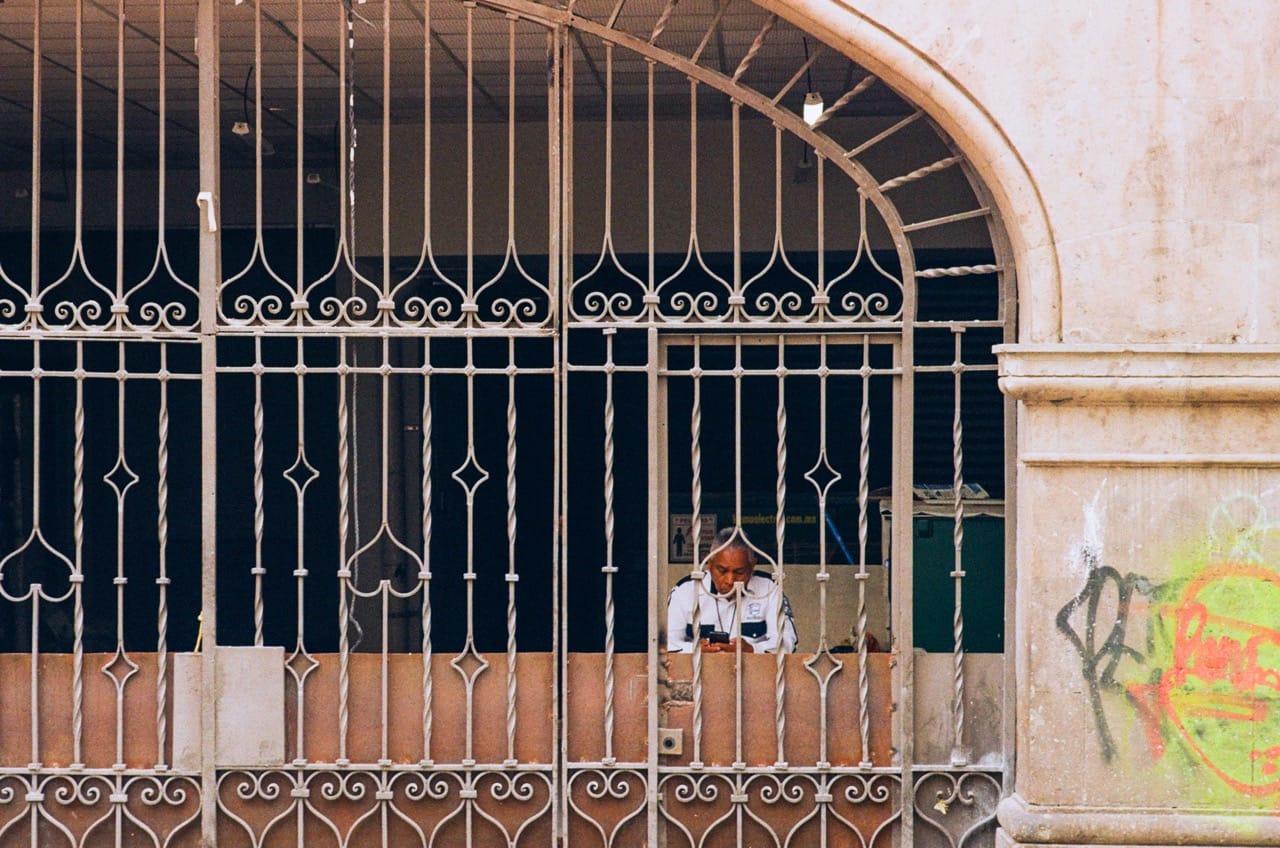
I'm not going to link to Amazon to try to make a few cents off your purchase of this book; if you decide to buy it, go to your local independent bookstore or order from bookshop.org. Stop giving money to billionaires.
Horizontal Vertigo: A City Called Mexico, by Juan Villoro, translated from the Spanish by Alfred MacAdam - Vintage Books, 2024.
Photographs by me, 35mm on various Kodak stocks with various cameras, except the cover shot, which is from my iPhone.
Member discussion