Gallery: Tuneles and Callejones
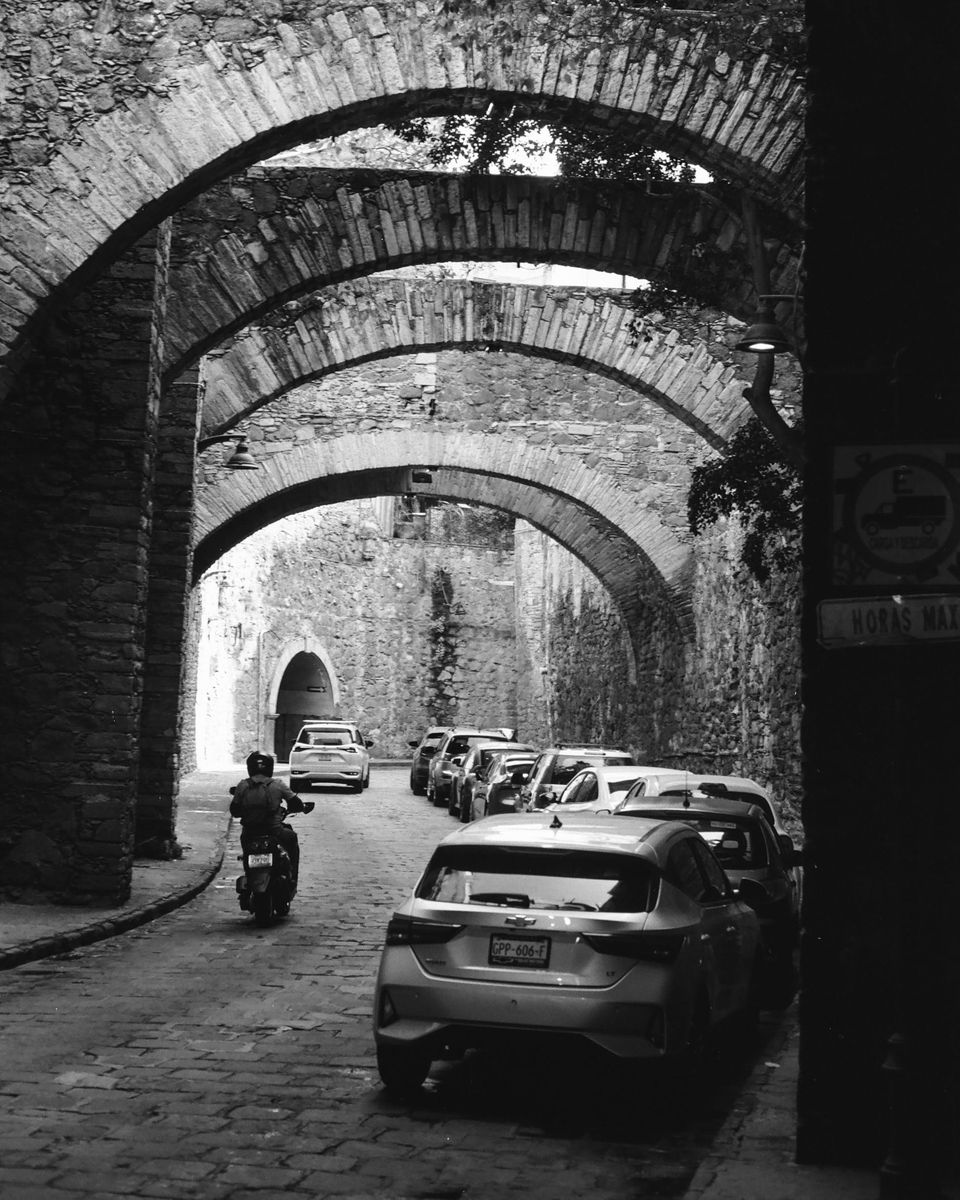
Guanajuato is a beautiful city, although that beauty was born from colonial extraction. The Spanish found the area to be chock-full of gold and silver deposits, so they founded Guanajuato in 1559 as a mining center. It’s a UNESCO World Heritage Site now, and two of the city’s most distinct and interesting features can be traced back to the mines: the tuneles and the callejones.
Tuneles means ‘tunnels’, and a series of them runs around and under the city. The center of Guanajuato stretches through a narrow valley bottom, and like many valley bottoms, a river runs through it. In the early 1800s the tunnels were constructed to divert and channel the Rio Guanajuato underground, and to try and control floods. By the middle of the 20th century, dams and reservoirs further upstream robbed the river of its strength and volatility. What remained of it was routed even further underground, and the tunnels became roads.
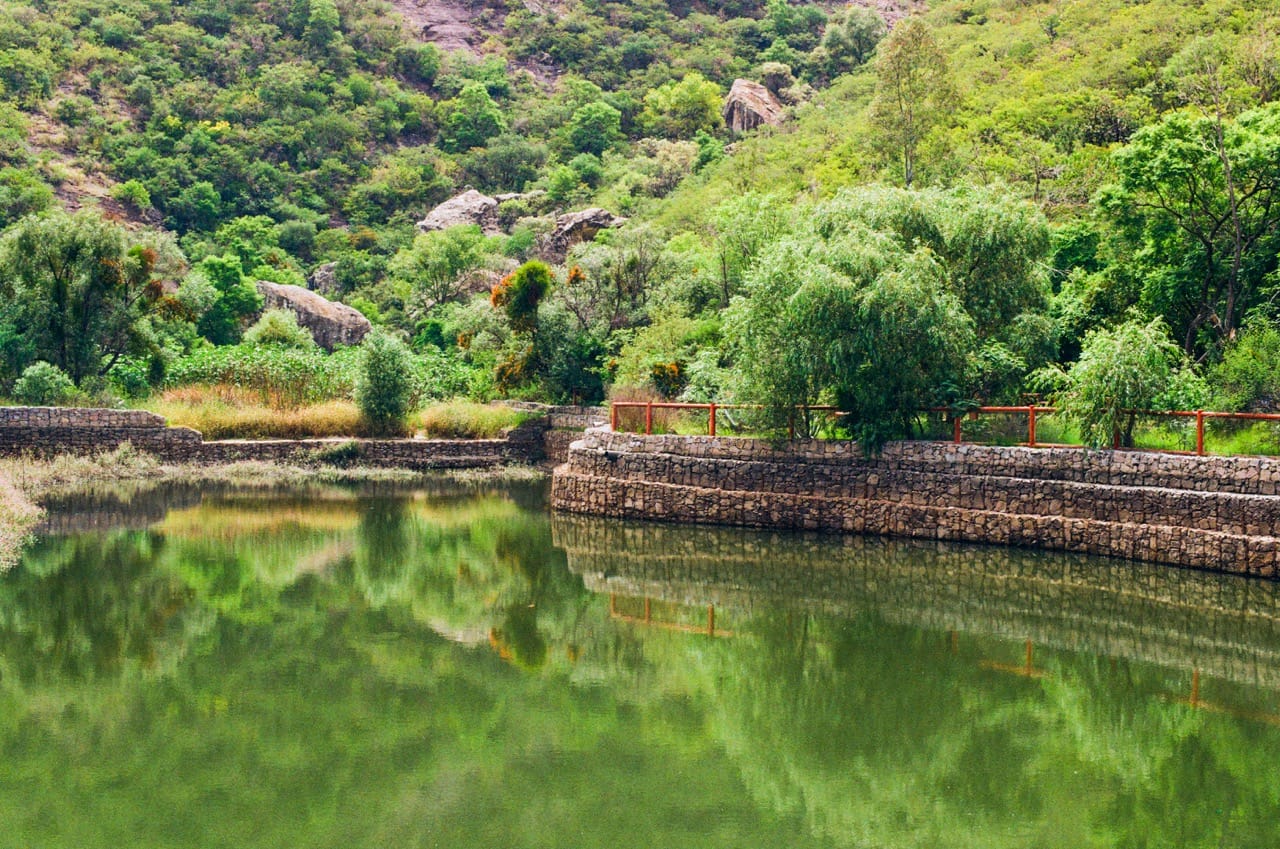
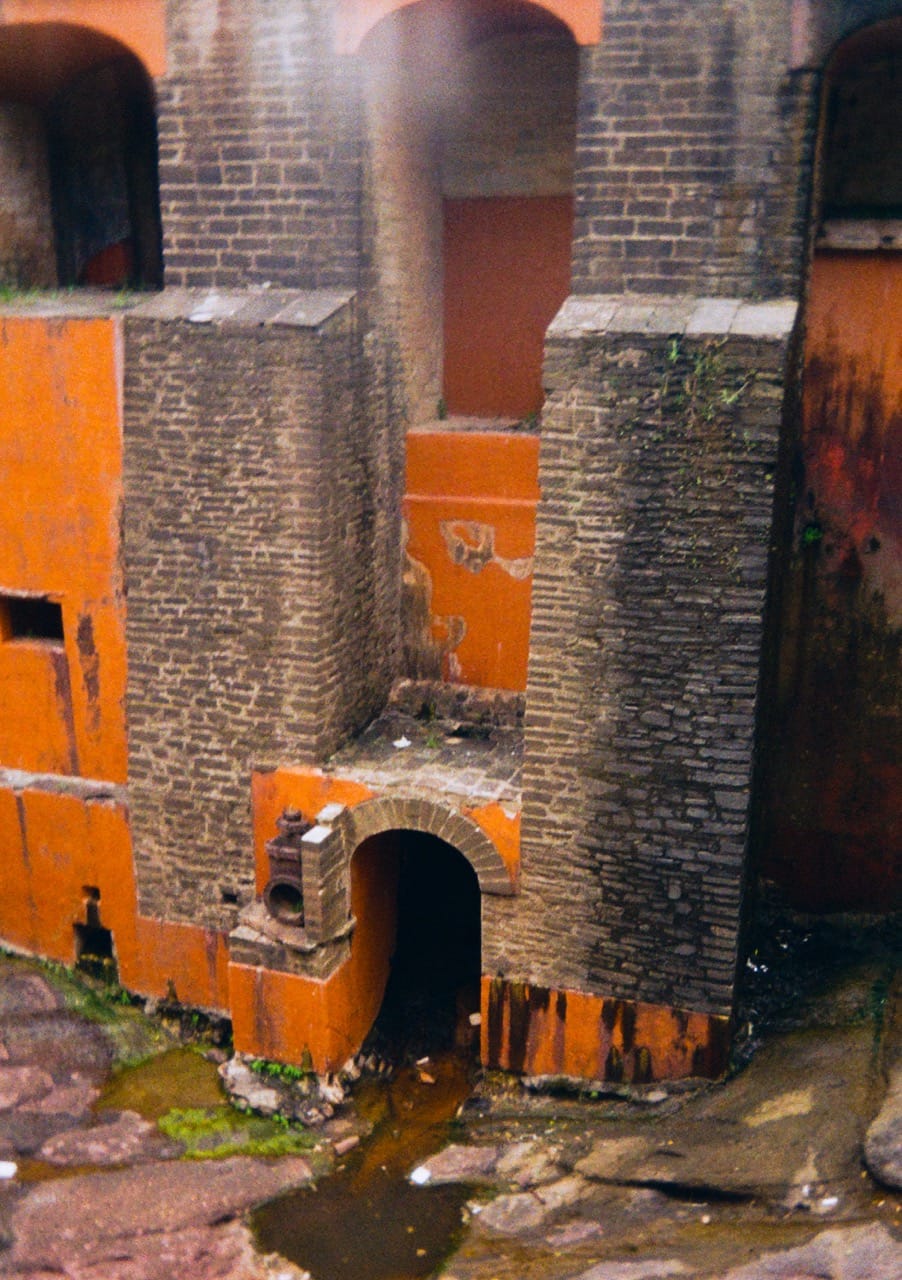
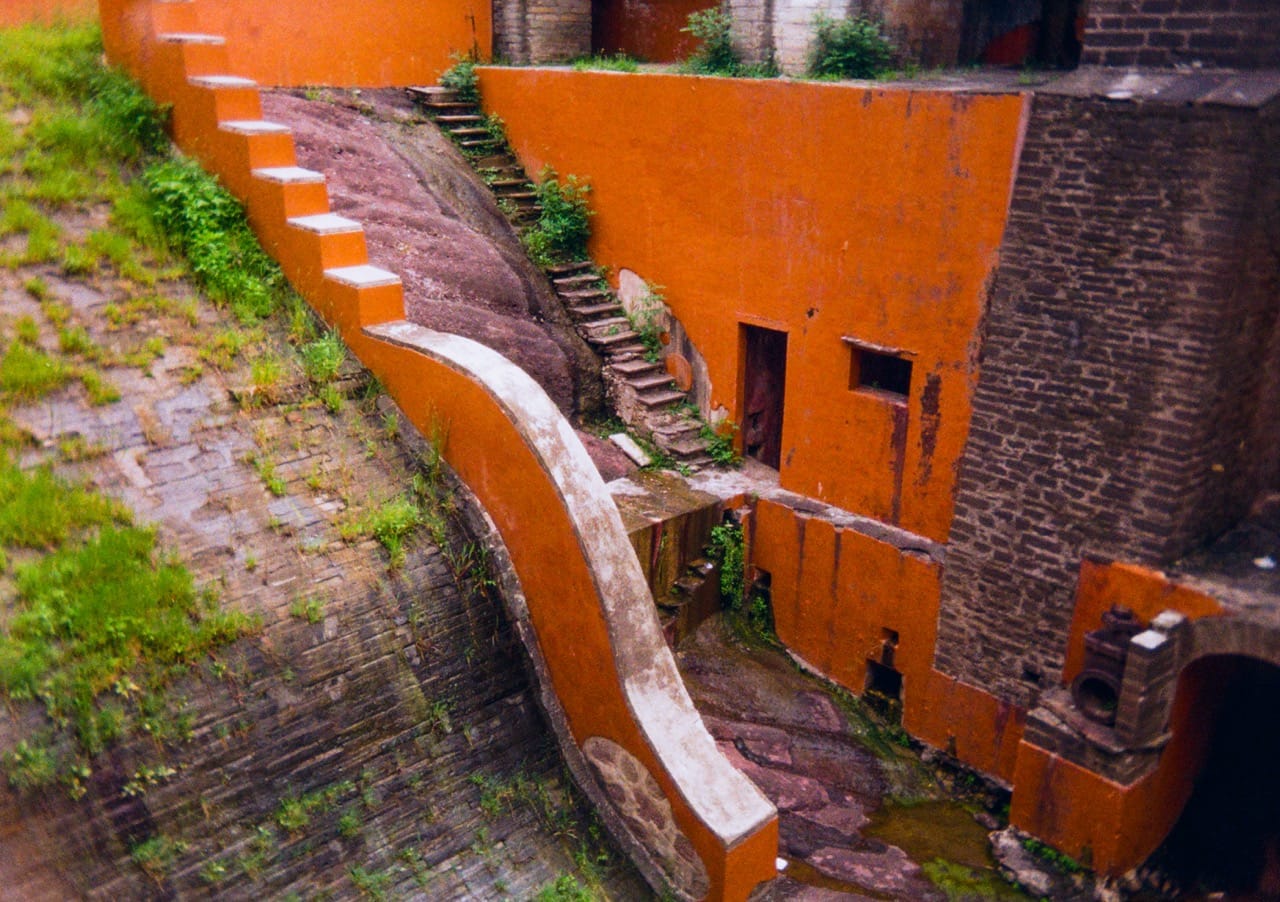
One of the reservoirs, and the dam below it
The tunnels are fascinating to walk through, if one doesn’t mind the stretches of vehicle traffic or occasional latrine-smell. I took my 35mm Nikon FM, loaded with Fuji Acros 100 black-and-white film, underground with me one day.
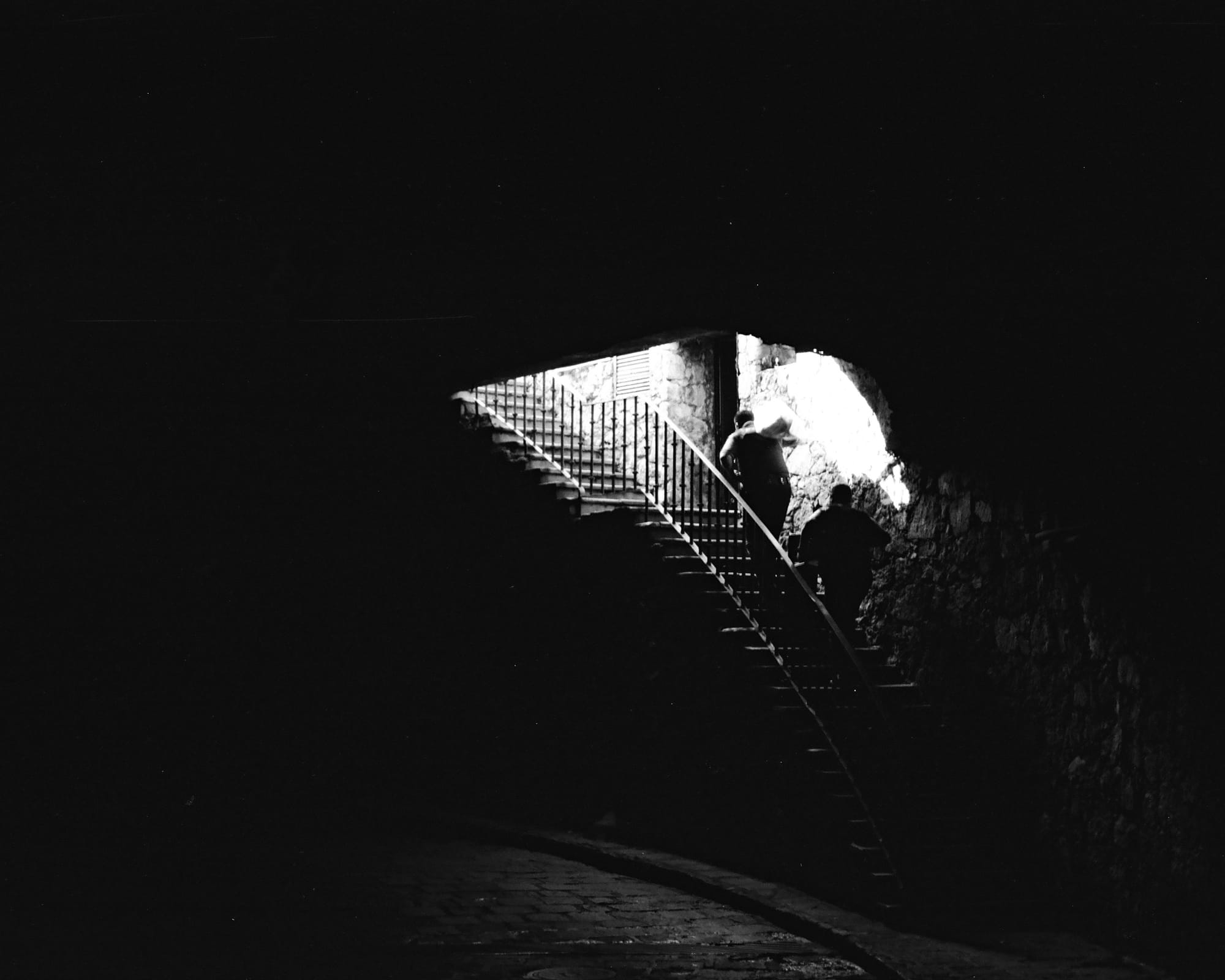
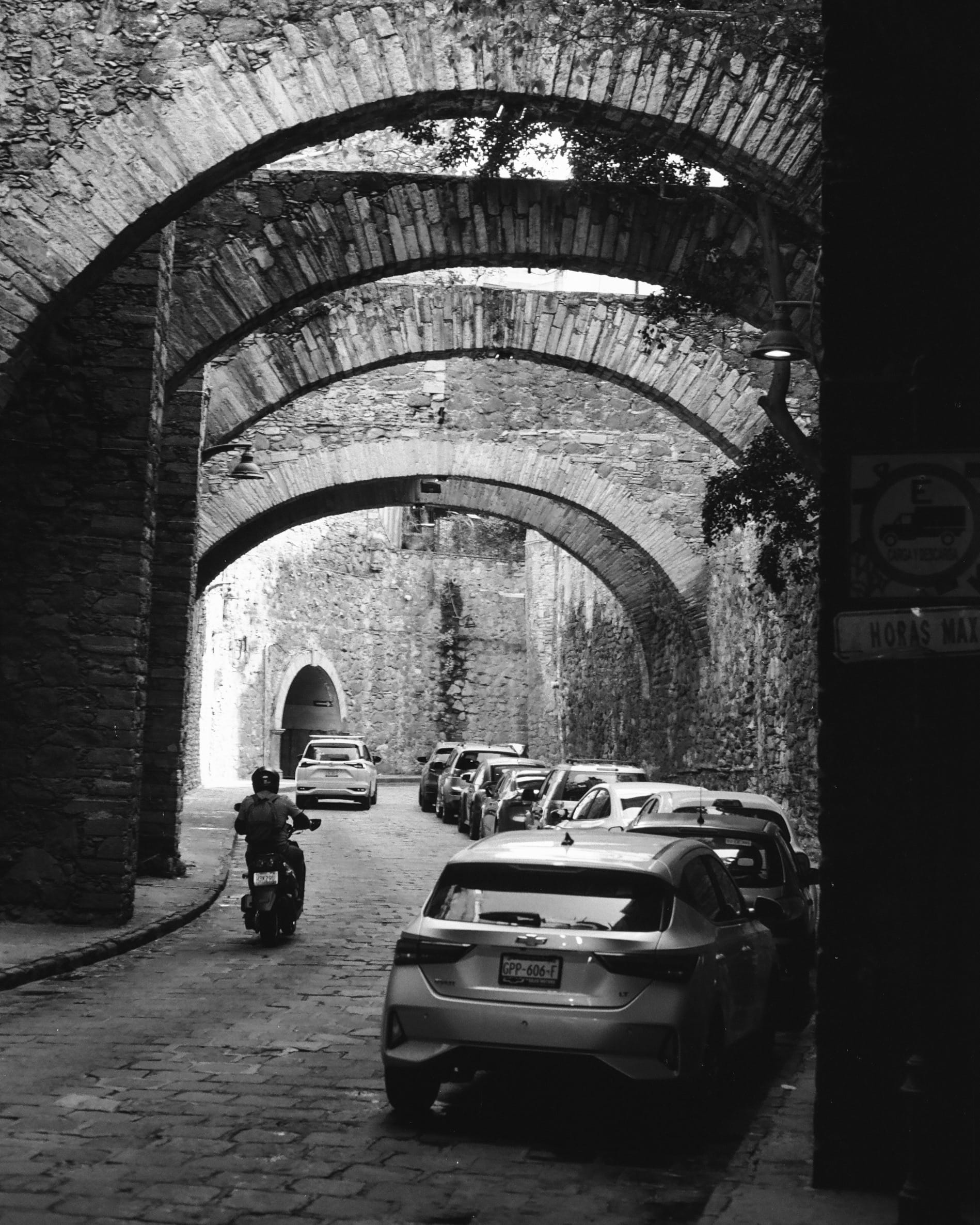
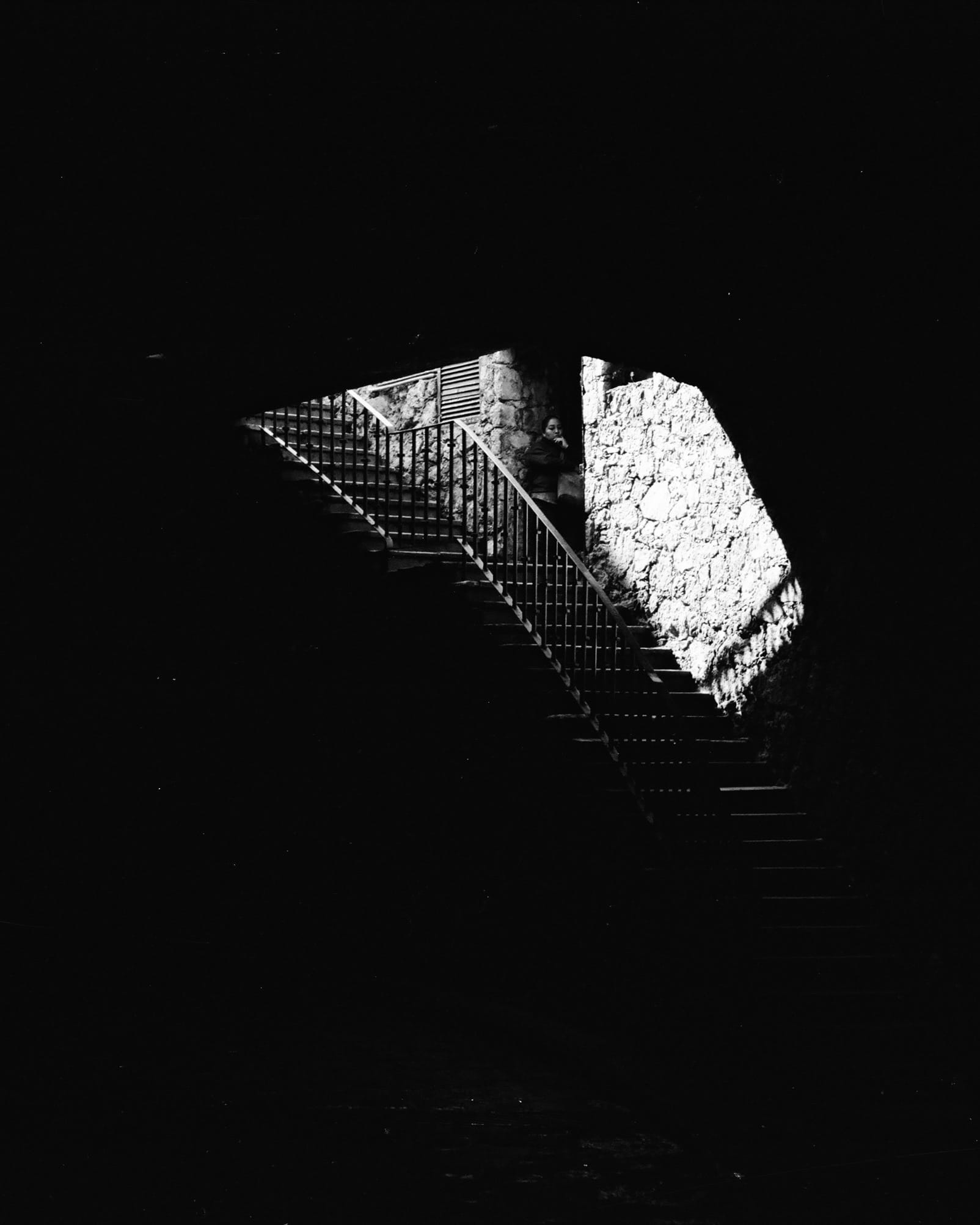
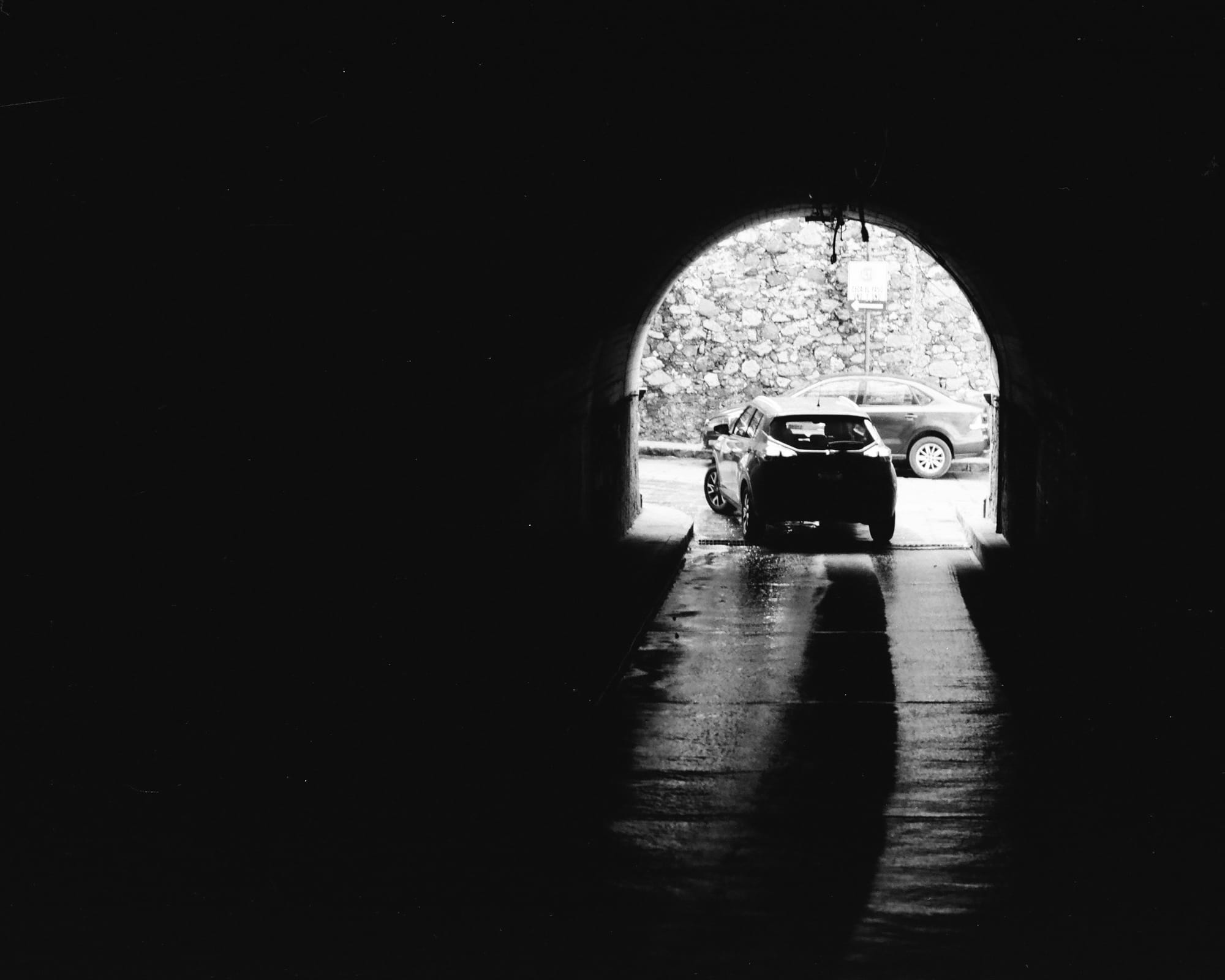
Tuneles in Black and White
While the tuneles go low, the callejones go high. These ‘alleyways’ were once used by the miners to haul supplies and minerals up and down the steep sides of the valley. As the city grew, they transformed into public pedestrian streets. I stayed on the rim of the valley while I was in Guanajuato, near the monument to El Pípila, so my journeys into the center always started with one or another callejon. The vibrant homes lining them made color film seem like the right choice. I took these with my Nikon FM2 and my Kodak H35.
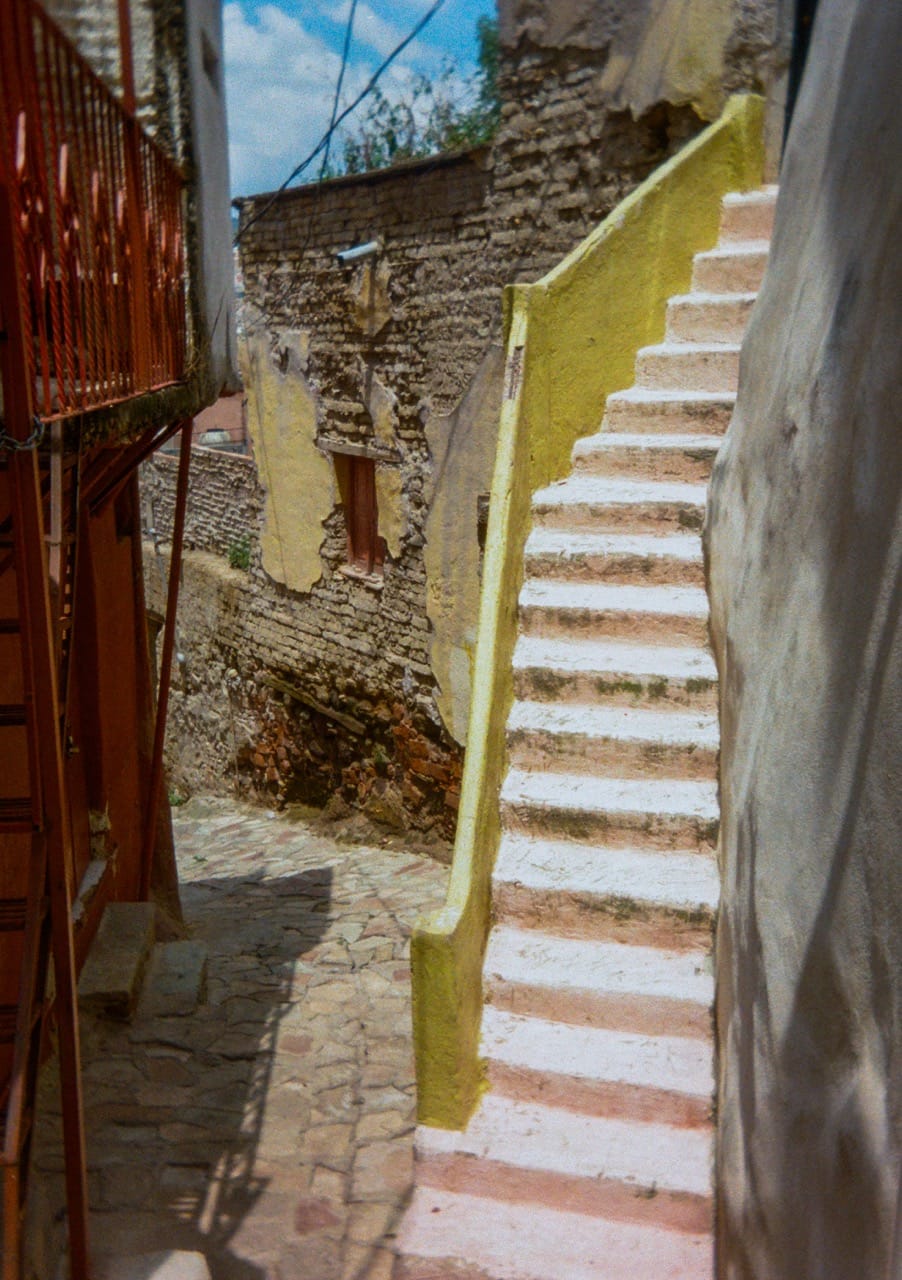
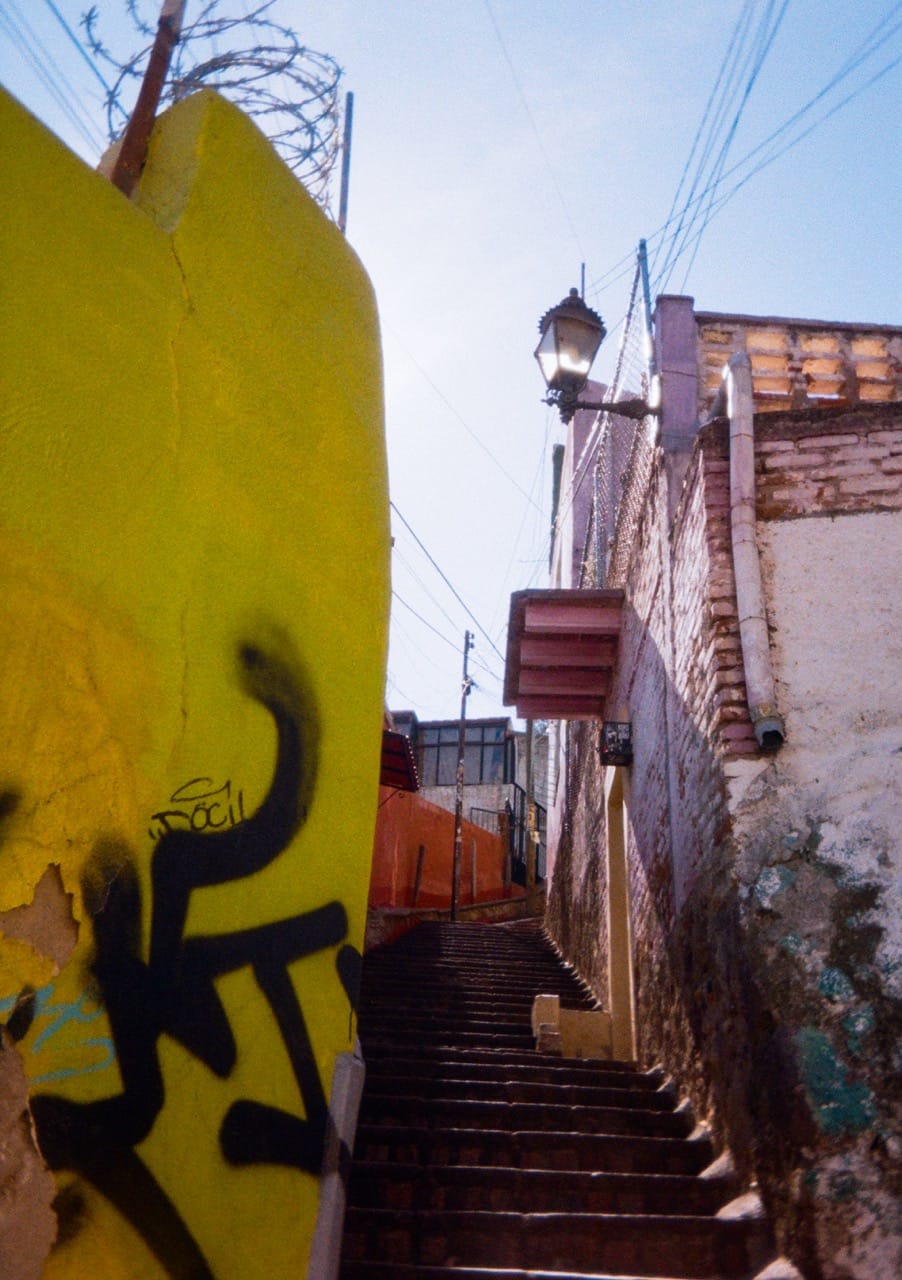
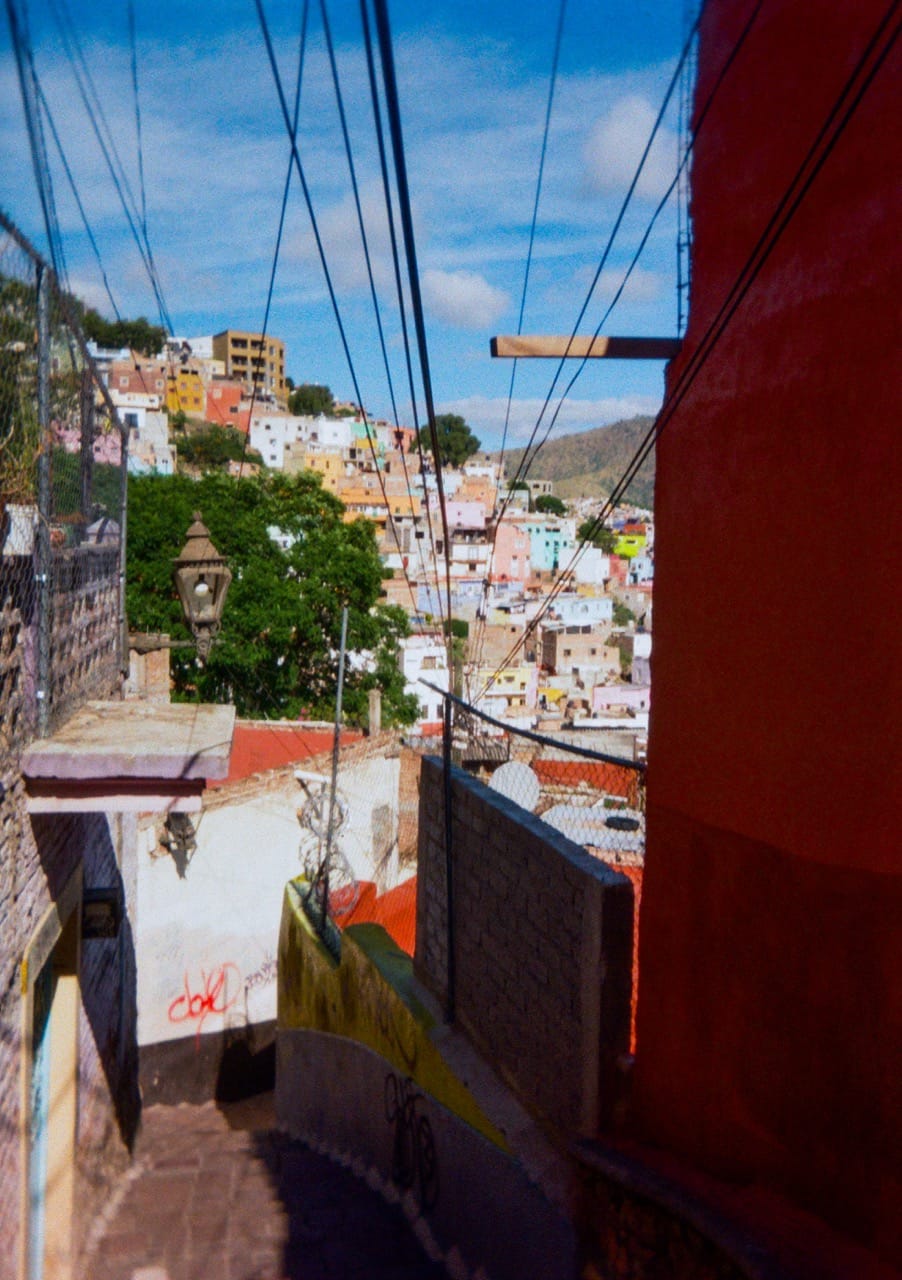
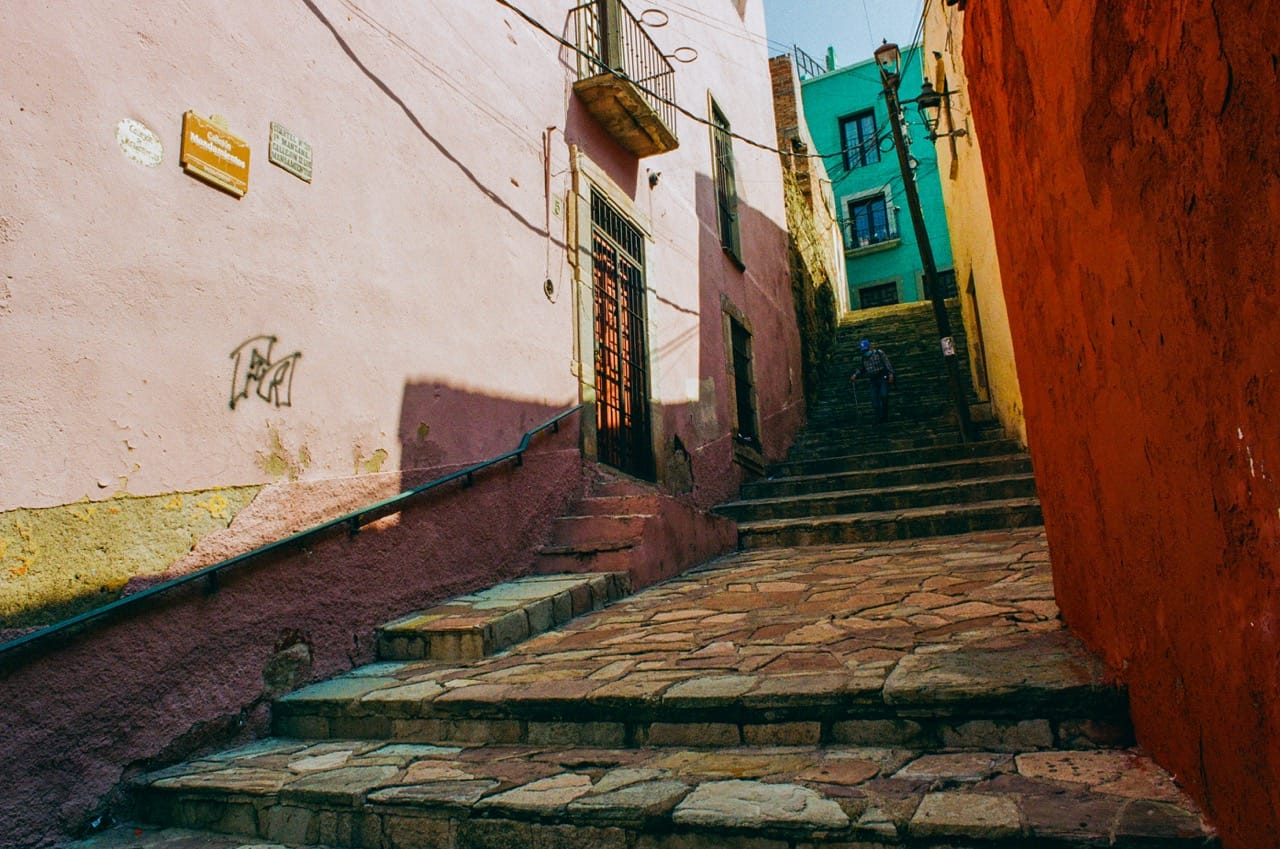
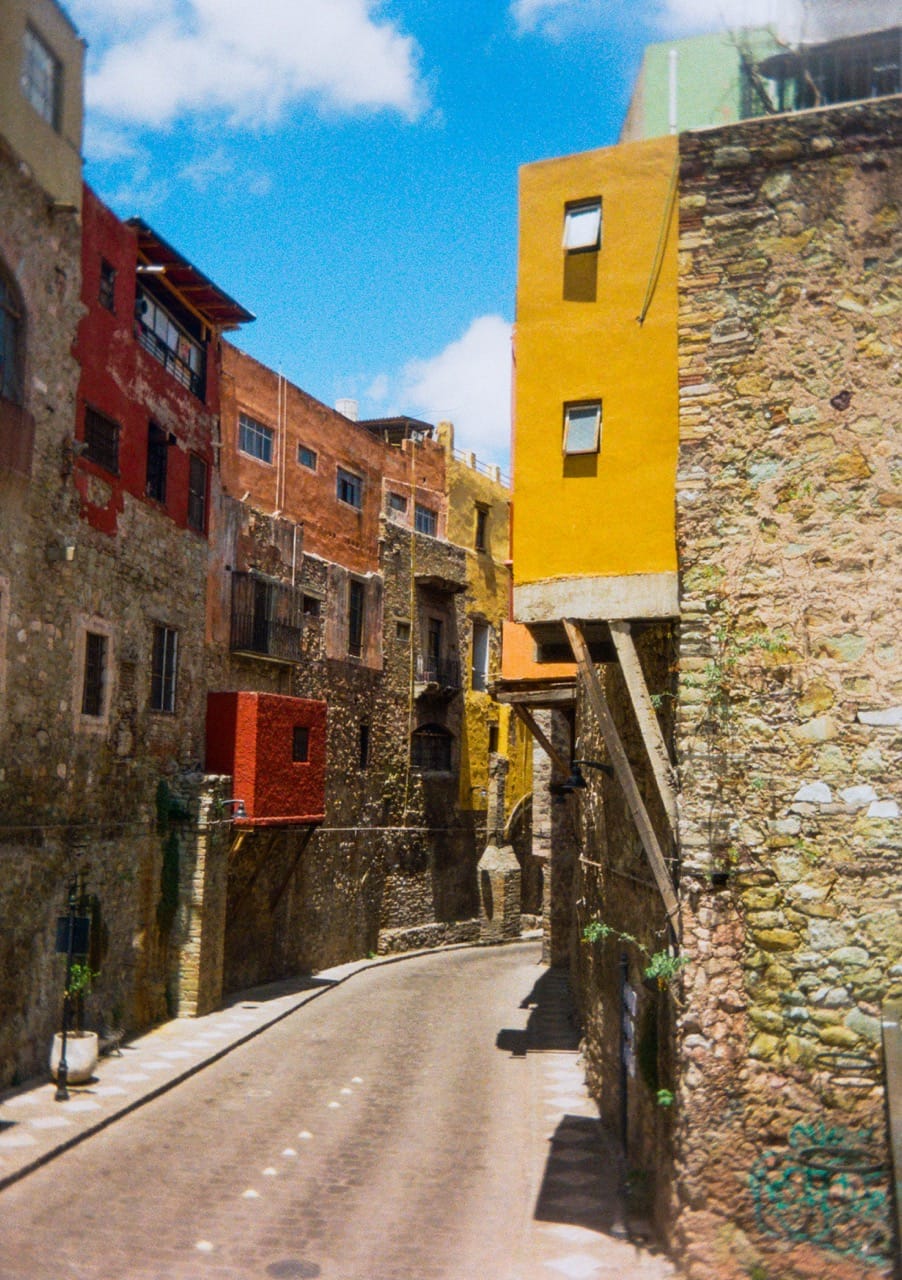
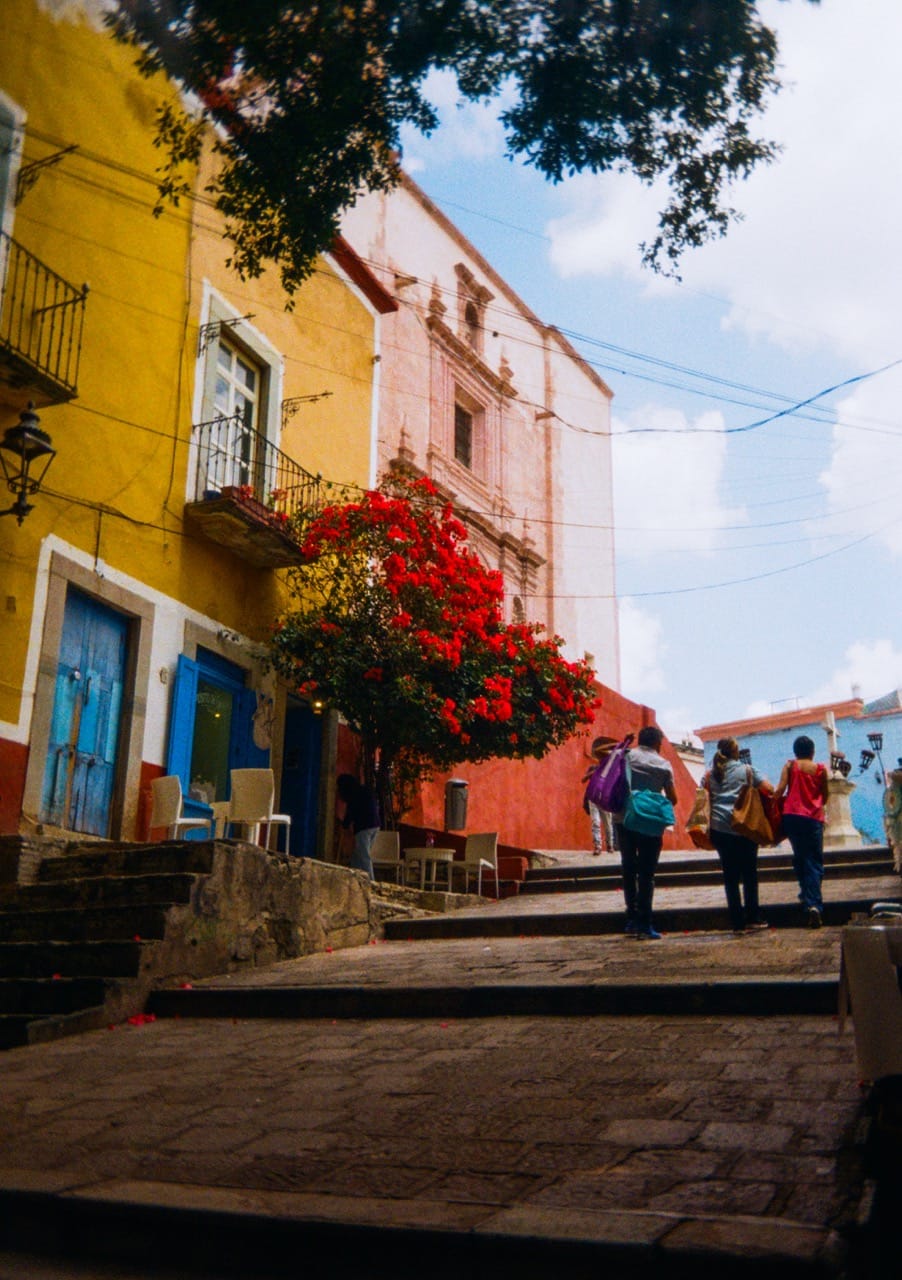
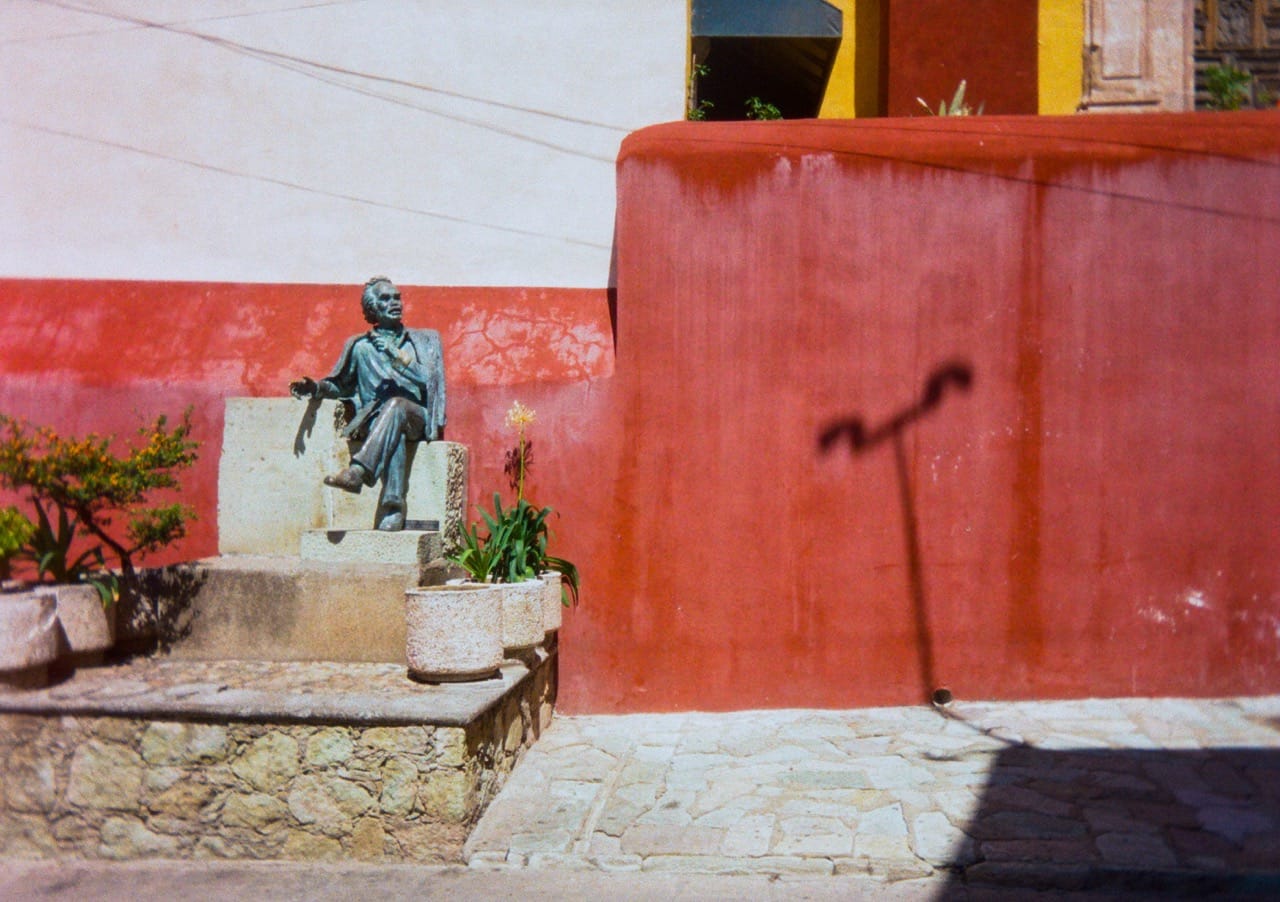
Kodak Gold 200 film, Nikon FM2 + Kodak H35
The most famous is the Callejón del Beso (‘alley of the kiss’). The story goes that the daughter of a wealthy Spanish family lived on one side of this alley, and she was forbidden by her father to see her lover, a common miner. The miner rented the room across the balcony, separated by only a couple of feet, and the couple snuck out to talk and kiss outside the father’s watchful eye. He caught them, eventually, and stabbed the young man to death across the callejón. I suppose ‘alley of the kiss’ is more appealing to tourists than ‘alley of the class-war stabbing’, and there were people lined up for photos of themselves as I passed by.
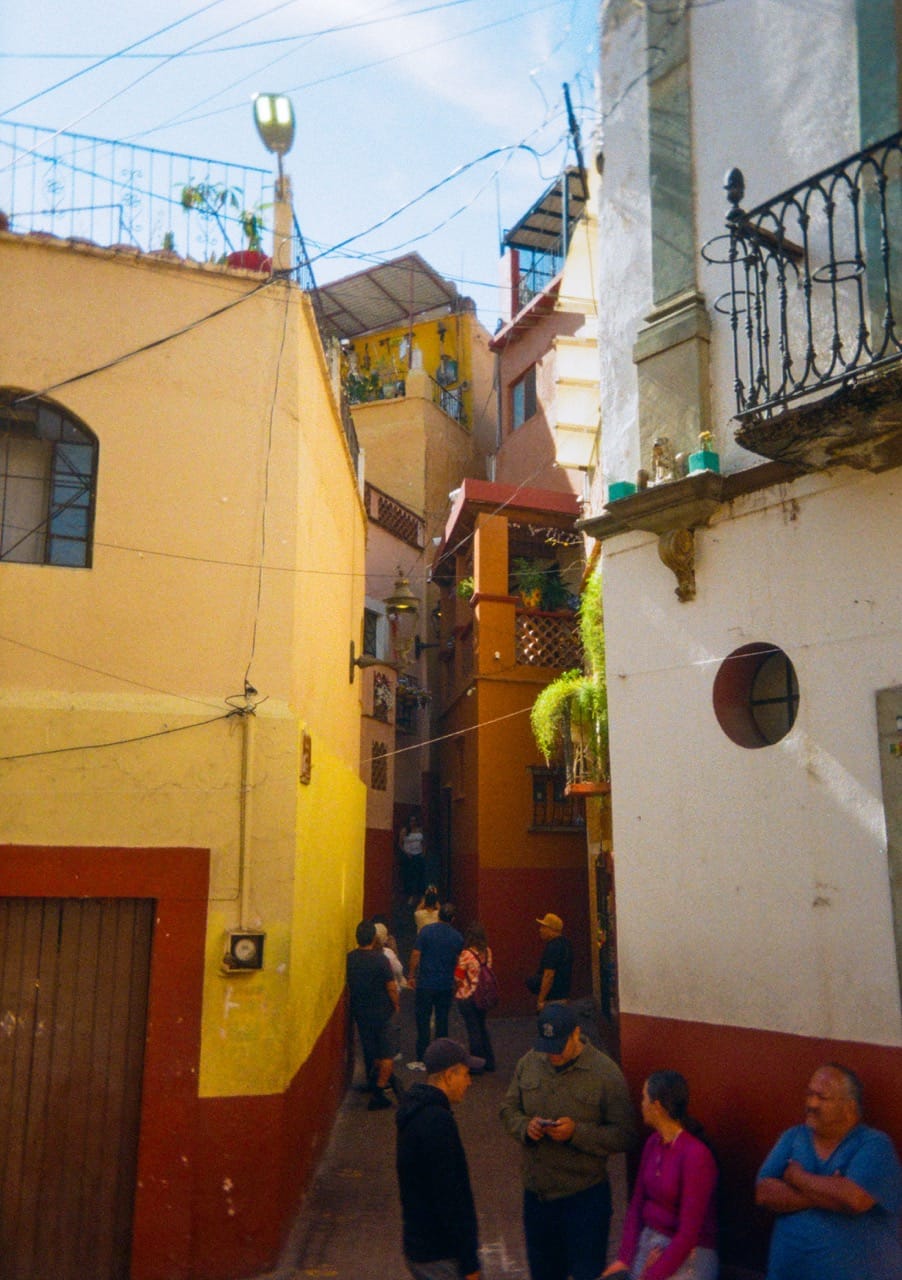
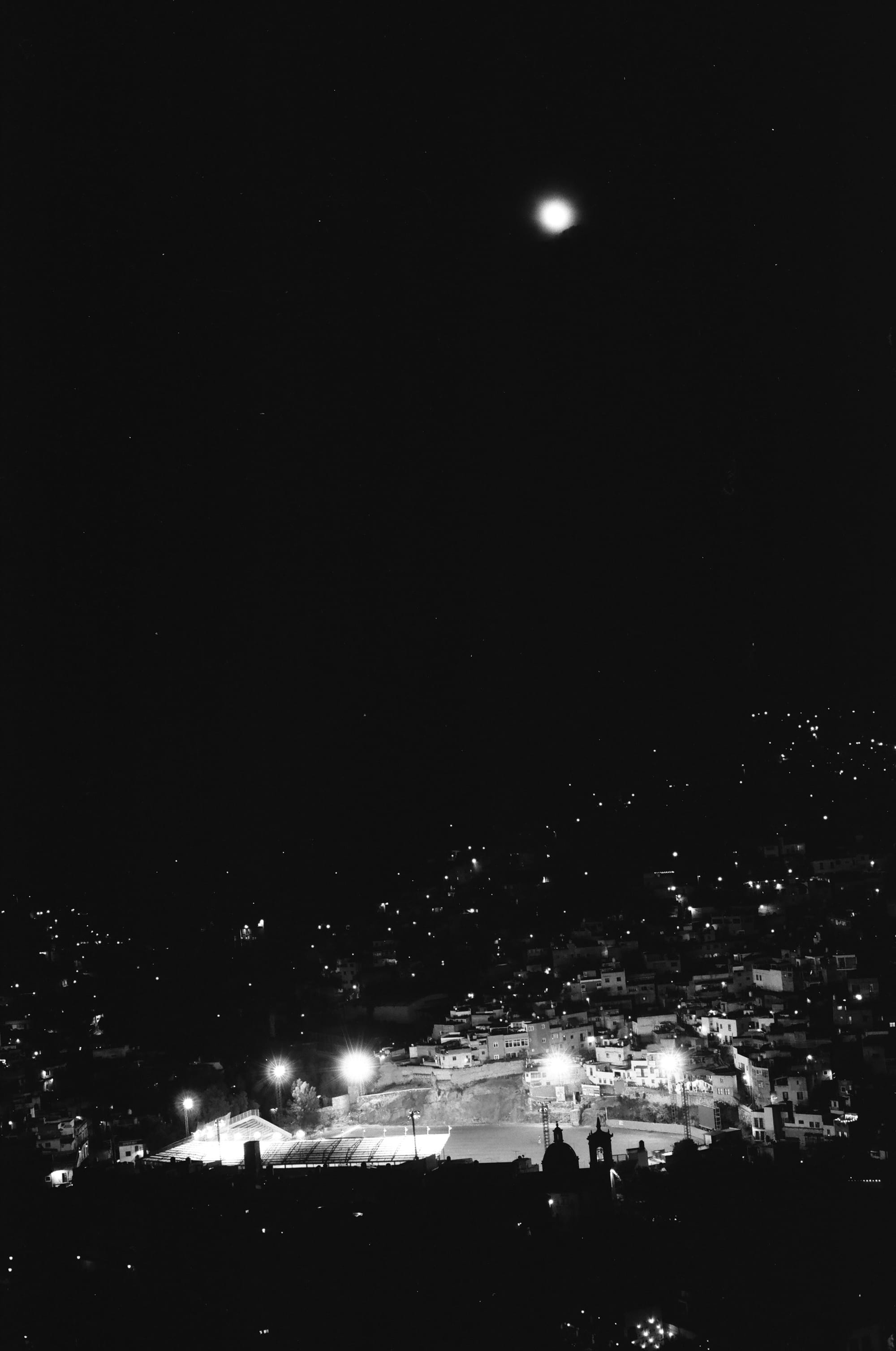
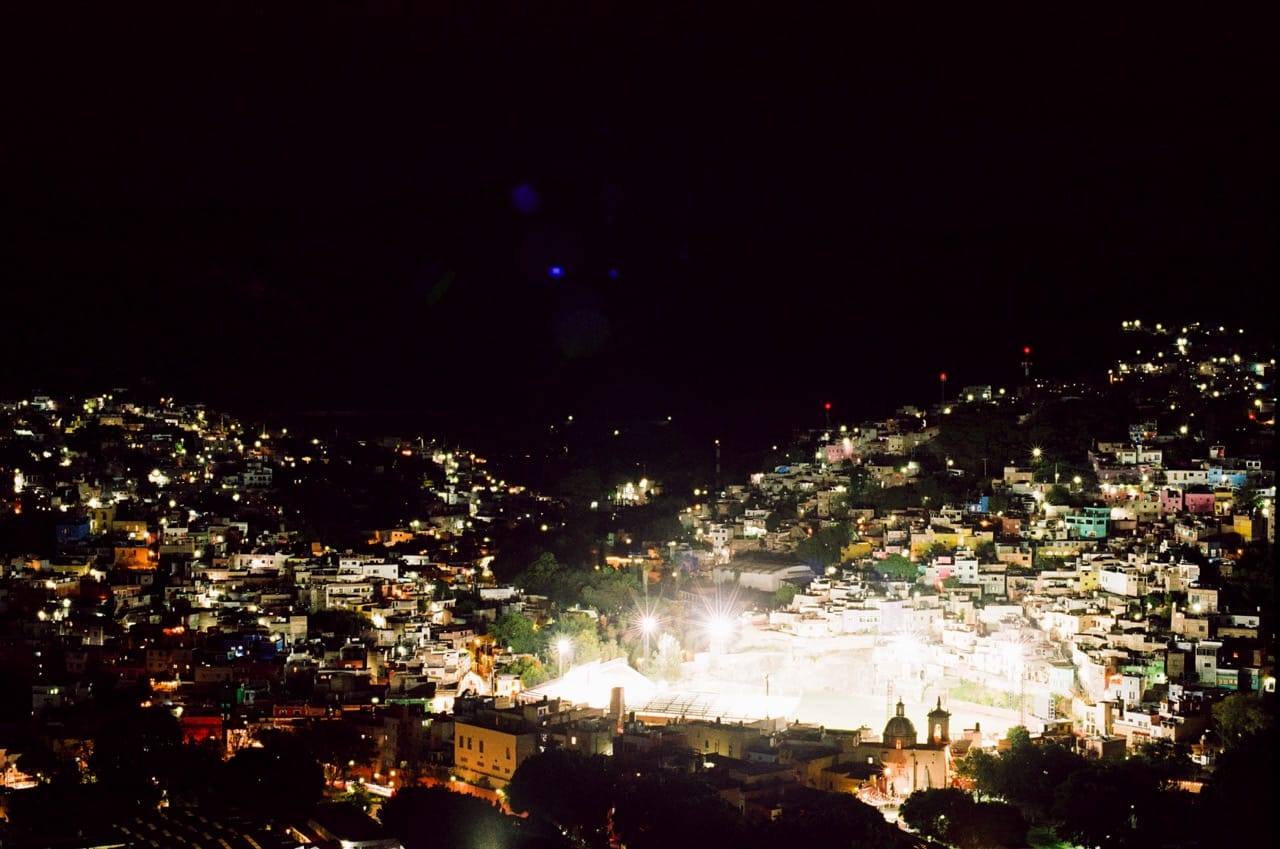
Also, I took the opportunity of staying on the rim to take some longer-exposure night shots of the city. For lack of another place to put them, here are black-and-white and color versions:
Baseball under the lights
If you’d like to purchase prints of any of these photos, comment below or message me here!
Member discussion