Monte Albán on Film
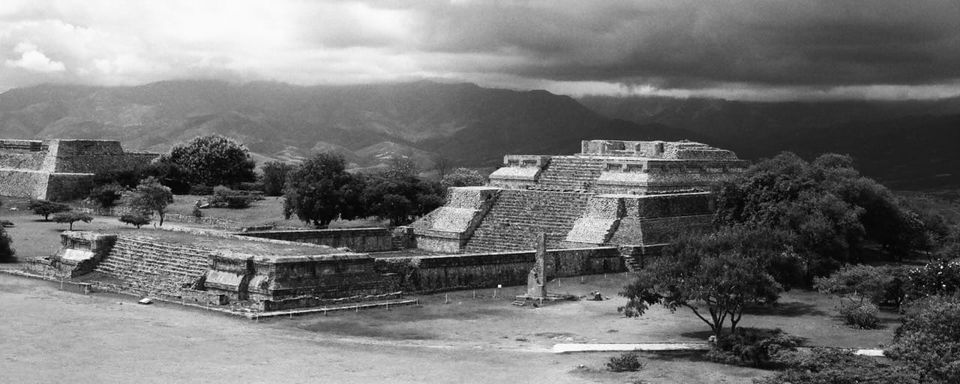
When I was in Oaxaca, Mexico earlier this month, I had the privilege of visiting Monte Albán, an ancient Mesoamerican city that was built beginning around 500 BCE (a century before Alexander the Great in Greece, for some context). At its most populous, Monte Albán was home to over 15,000 people, and it remained inhabited for over a millennium, till around 700 CE. Now it’s a protected archaeological site and, along with the city of Oaxaca’s historic center, a UNESCO World Heritage Site.
One morning, I caught the first van up from Oaxaca and wandered Monte Albán with my cameras for over three hours. I had a few frames left on a roll of black-and-white Kentmere Pan 400 in my Nikon FM2, with Fuji Acros 100 black-and-white waiting on deck. My trusty plastic Kodak H35 came with me too, loaded with Fuji Color 200.
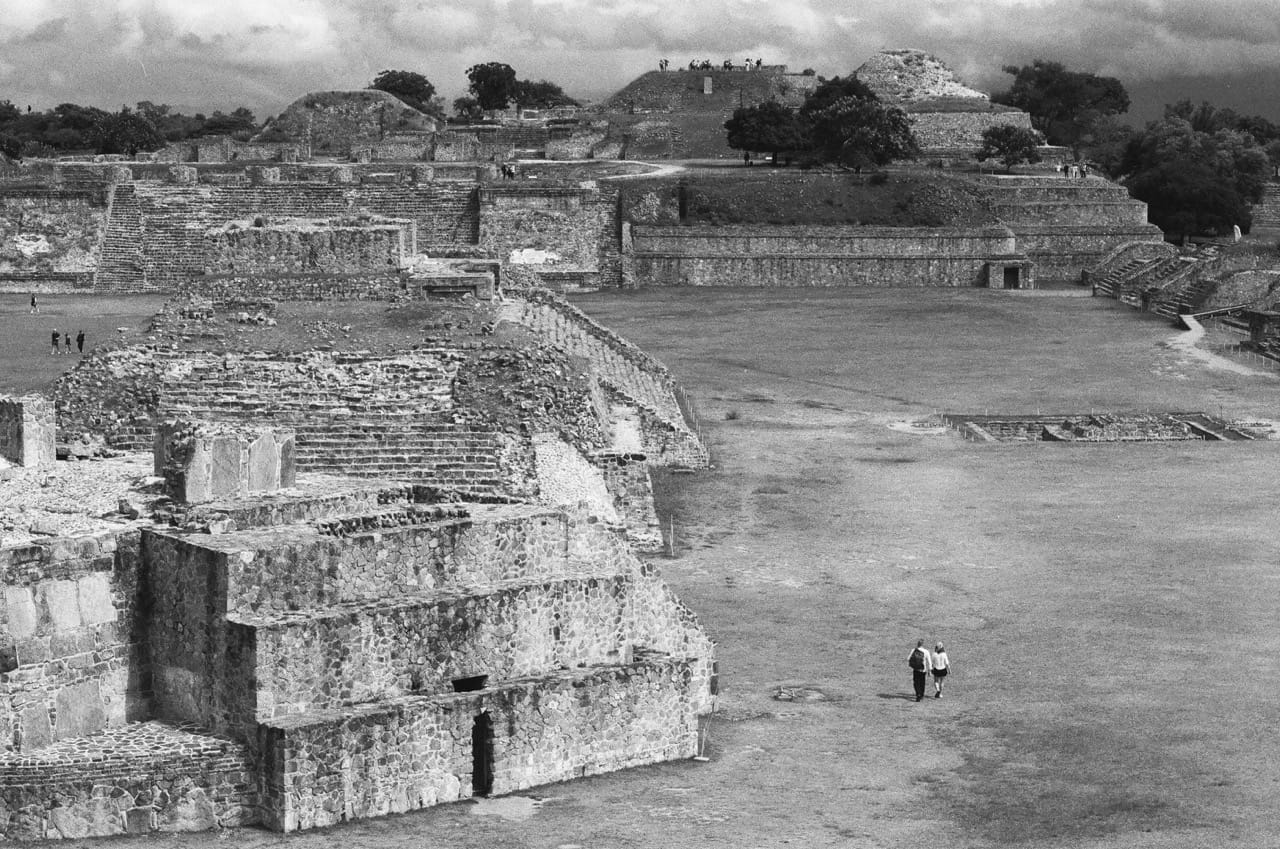
Most of what remains of Monte Albán is centered on what architects refer to as the Main Plaza. When the city was first constructed, the top of the mountain it’s on was intentionally flattened to create this plaza. It’s about 300 meters long and 150 wide, and the bulk of Monte Albán’s structures ring the outside of it (with a few in the middle). Here’s the Main Plaza from the top of the southernmost structure, the South Platform:
When I first arrived, the clouds mostly covered the sun - pleasant for walking around and climbing ancient stone staircases, but not the best for black and white pictures. This one below, on the Kentmere 400, has a flatter, less-contrasty look for that reason. But I was able to capture the couple walking across the plaza, which made the photo more interesting. (I’d met the couple in the van on our way up that morning, and we exchanged contact info. I sent them this picture and they loved it; I’m trying to make it a practice to offer to send a photo to anyone who’s in it.)
When I’d finished the Kentmere roll and switched to the Fuji Acros, the clouds had started to break up in the most majestic fashion. I began paying more attention to the sky than the historic city. These next photos I shot with an orange filter on the lens, which has the effect of darkening blue skies on black-and-white film.
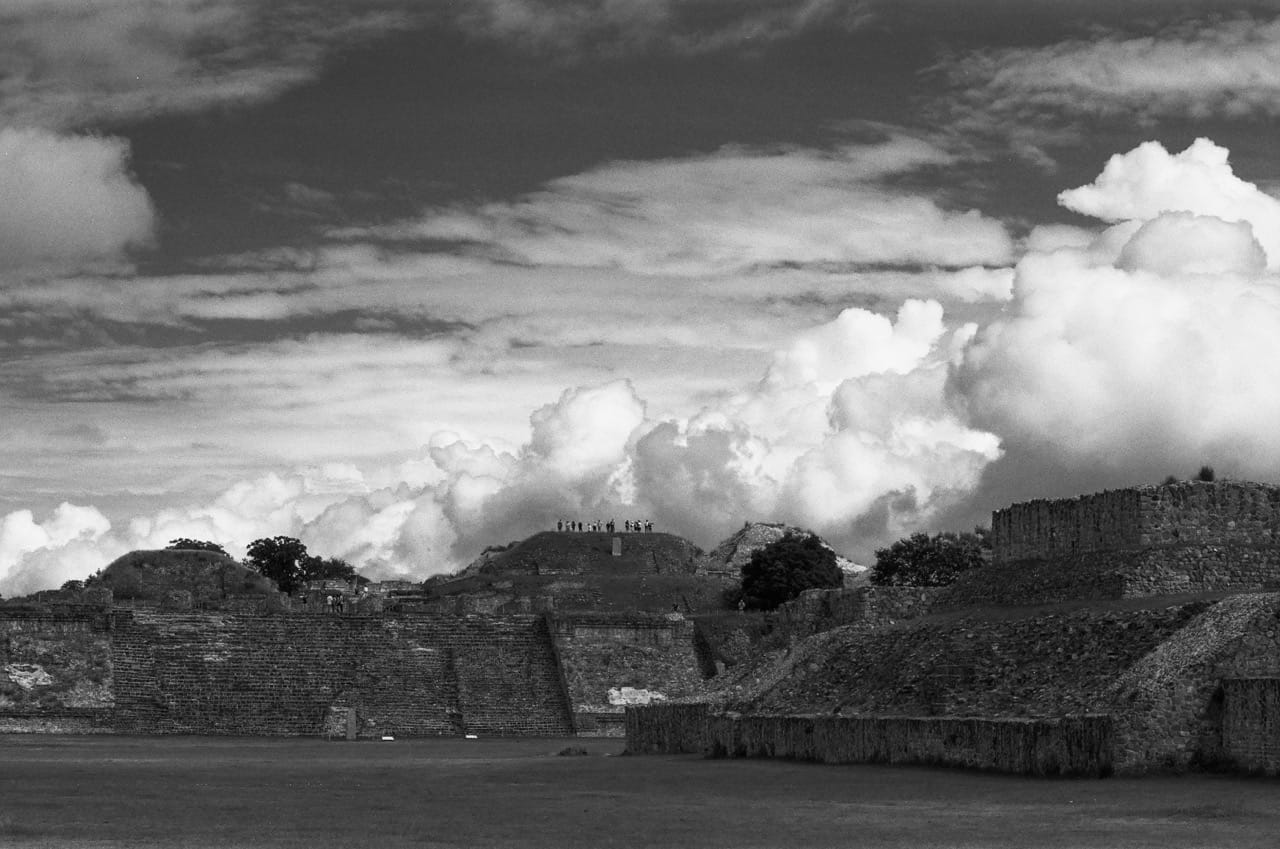
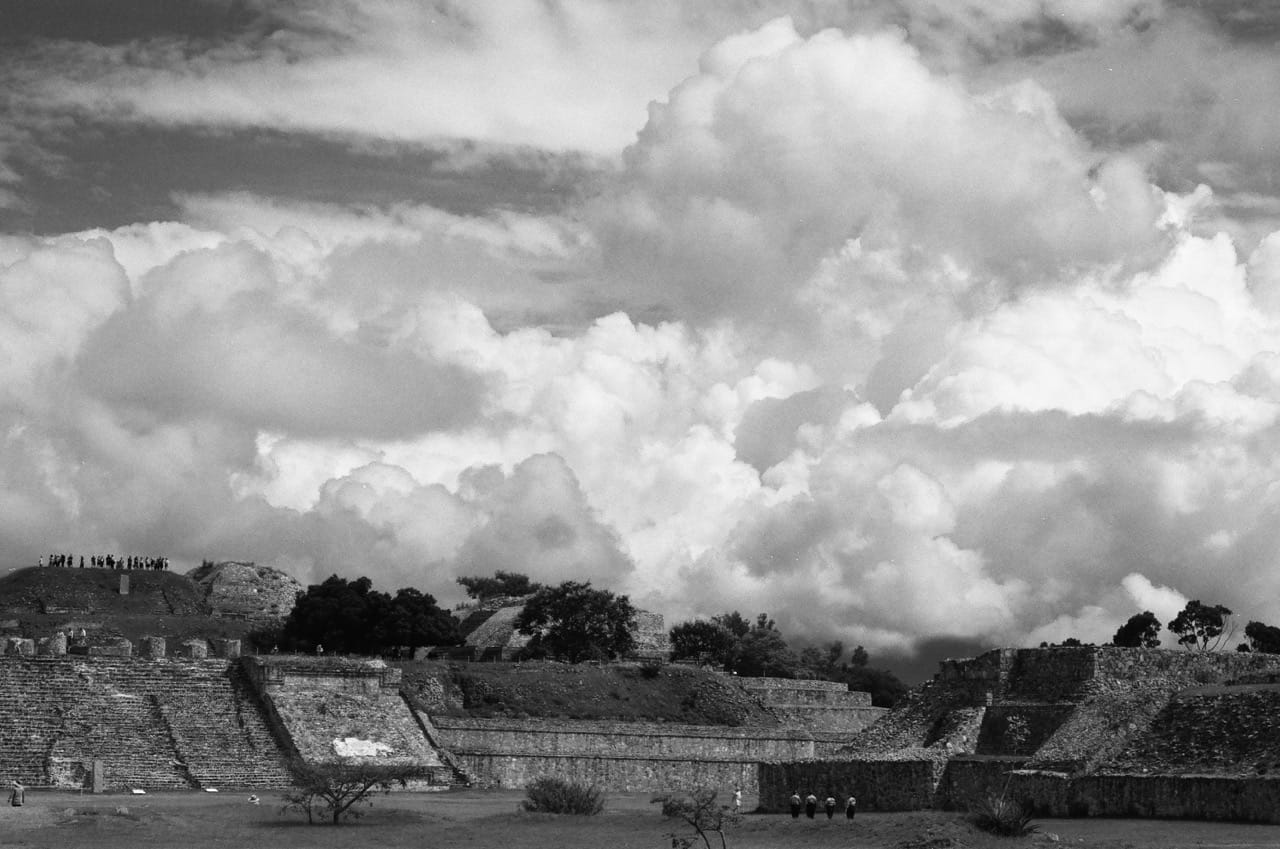
Something about those big skies drove home the ancient character of the place. After I took these photos, I put my cameras away for a bit and just wandered, slowly, taking in the architecture and the stillness of its mountaintop setting. Besides the grand structures lining the plaza, there were little out-of-the way pockets now planted with trees, or grasses, or bushes. The park had scattered some benches in these areas, and I sat on one for a long time just journaling and watching the structures and the sky.
I finished a long, slow lap around the perimeter of the plaza and climbed to the top of the North Platform (which is where the crowd of people stand silhouetted against the clouds in the photos above). About fifteen people stood up there with me, and I resolved to stay put until I had the platform to myself. Ten minutes later, after the last remaining visitor left (he took a couple of selfies with his phone first), I stood alone on the tallest structure of this ancient city.
The wind had begun blowing harder, and I felt it as I stood facing south, in the direction from which I’d photographed earlier that morning. Noticing weather always grounds me in a particular location, and I used the feel of the wind on my face to do so. I was on the highest point of the city, and I stretched out my arms above my head. For a moment, I felt connected not only to the place, but to the history of humankind, in an indescribably tangible way. It was as if I became part of the place - a feeling I’ve had before, and the best type of feeling I think I can have as a traveler.
Monte Albán is the oldest human-civilization site I’ve been to so far in my travels, and the new experience for me was also feeling as if I became a part of the place’s past. For those few minutes I was alone on that platform, I felt like I could have been standing there at any point in the past twenty-five-hundred years. The place felt timeless, and I too, in that place, felt timeless
Soon enough, the next wave of visitors joined me on the platform, and I came back to the present. I looked around and saw that one edge of the sky had darkened. The wind I’d felt on my face was blowing in another wave of clouds, and off in the distance I could see those clouds being followed slowly by rain.
The sun was still shining through pretty steadily on the city itself, though. So I walked over to another part of the platform, closer to a structure called System IV, where the light against the darkening sky looked especially dramatic. I took out my camera and watched. Film being as finite and expensive as it is, I wanted to wait for the best possible light.
While I was waiting, a group of visitors asked if I would take a picture of them. The midwest-nice part of my psyche revolted against it, but I told them no, I had to wait for the light. And I’m glad I did. A few moments later, the sun lit up System IV and I snapped this photo:
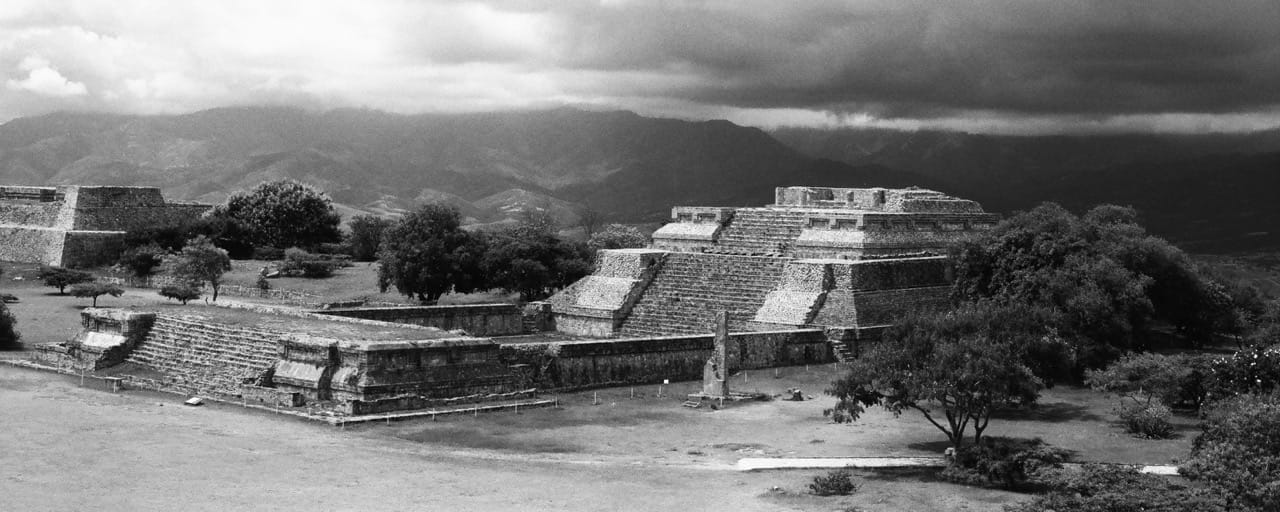
Only when I got the scans of my negatives back from the development lab did I realize that this photo looks timeless in the same way that standing alone on the North Platform felt. I’d managed to capture it at a moment when no other people were visible as well. It might be my favorite photo of this whole Mexican trip so far - the cropped version at least.
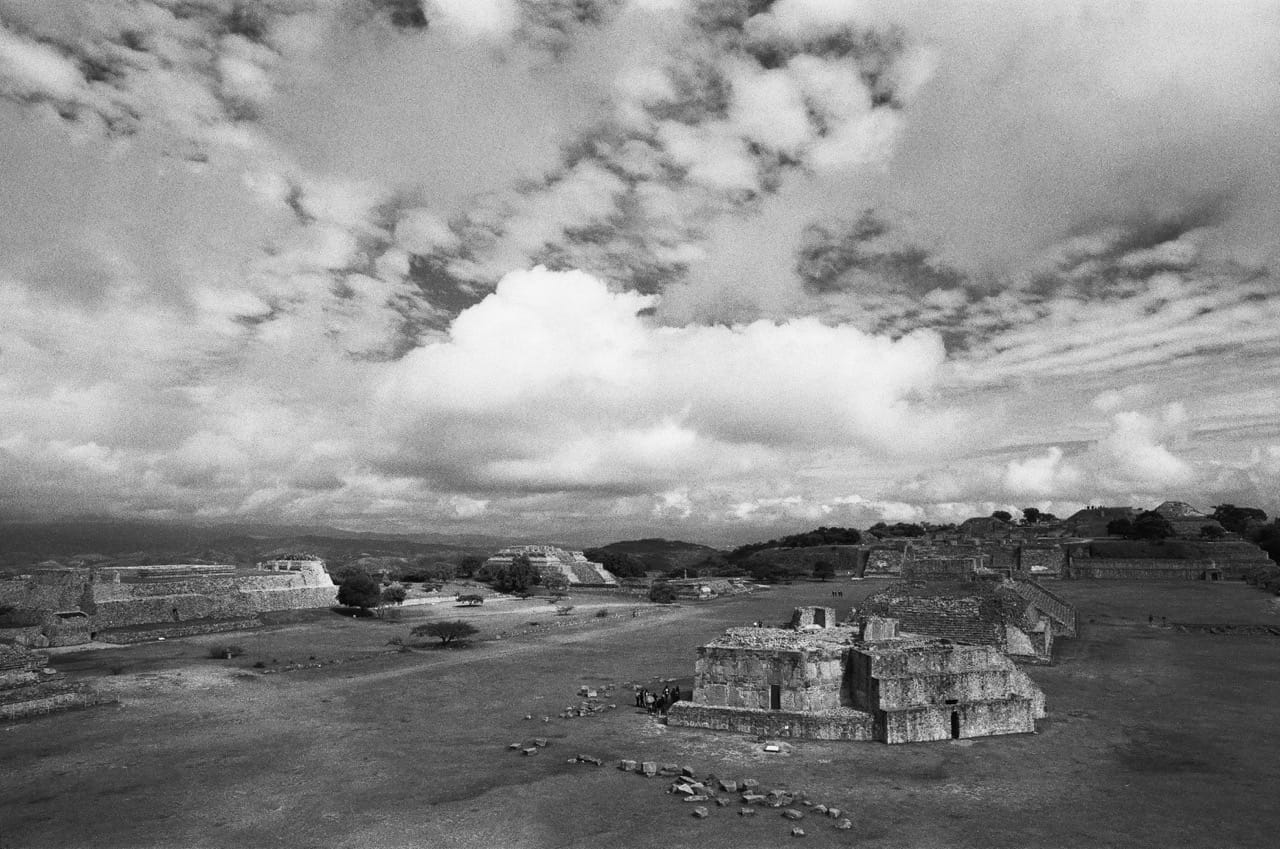
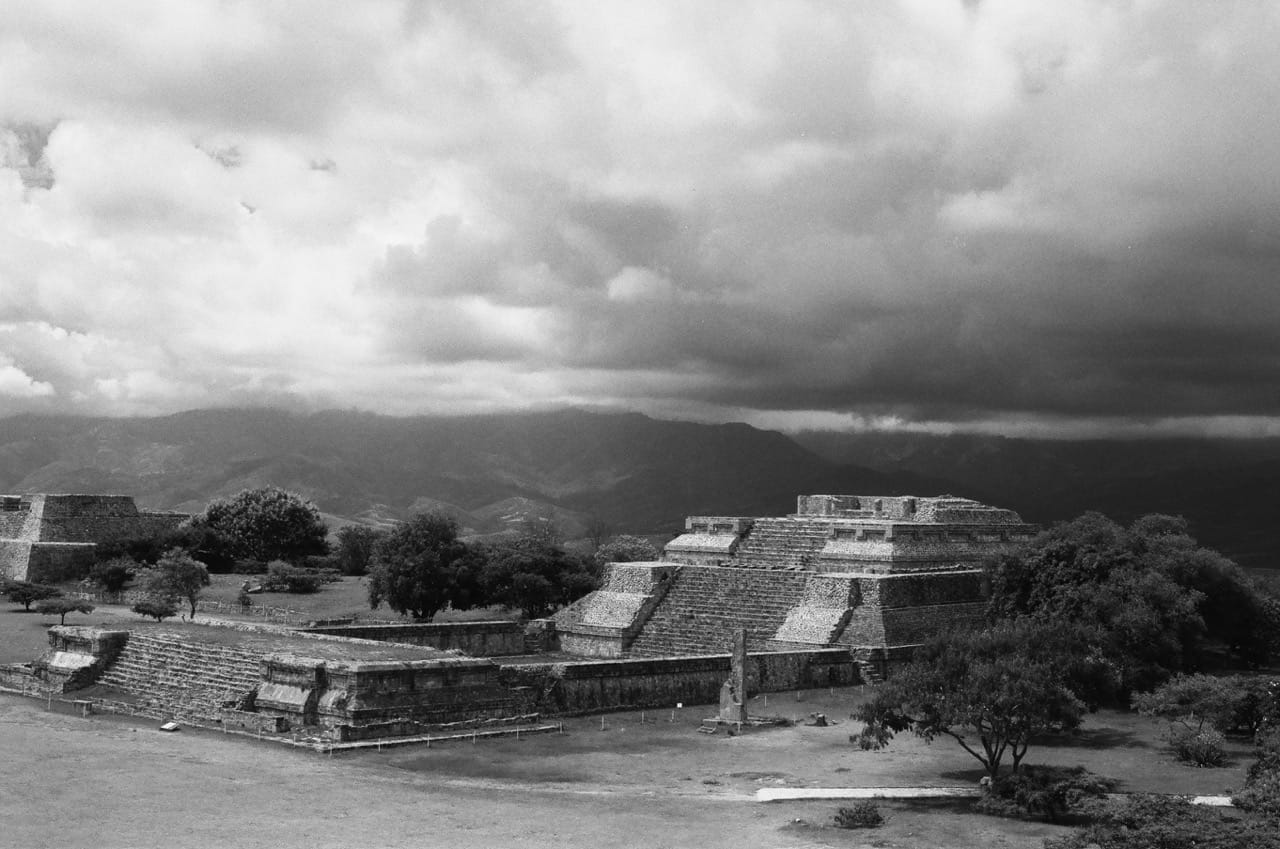
I knew when I took it that I was going to crop the final image. Besides making it look more cinematic, the wider aspect of the final image removes a lot of the relatively-uninteresting cloudy sky above the buildings. Here’s what it looks like uncropped, for reference:
I also like the photos I took on my H35, but for a different reason. These aren’t super quality compositions or anything, but they do capture the vibrancy of the green-and-stone city below the blue mountains and bright sky:
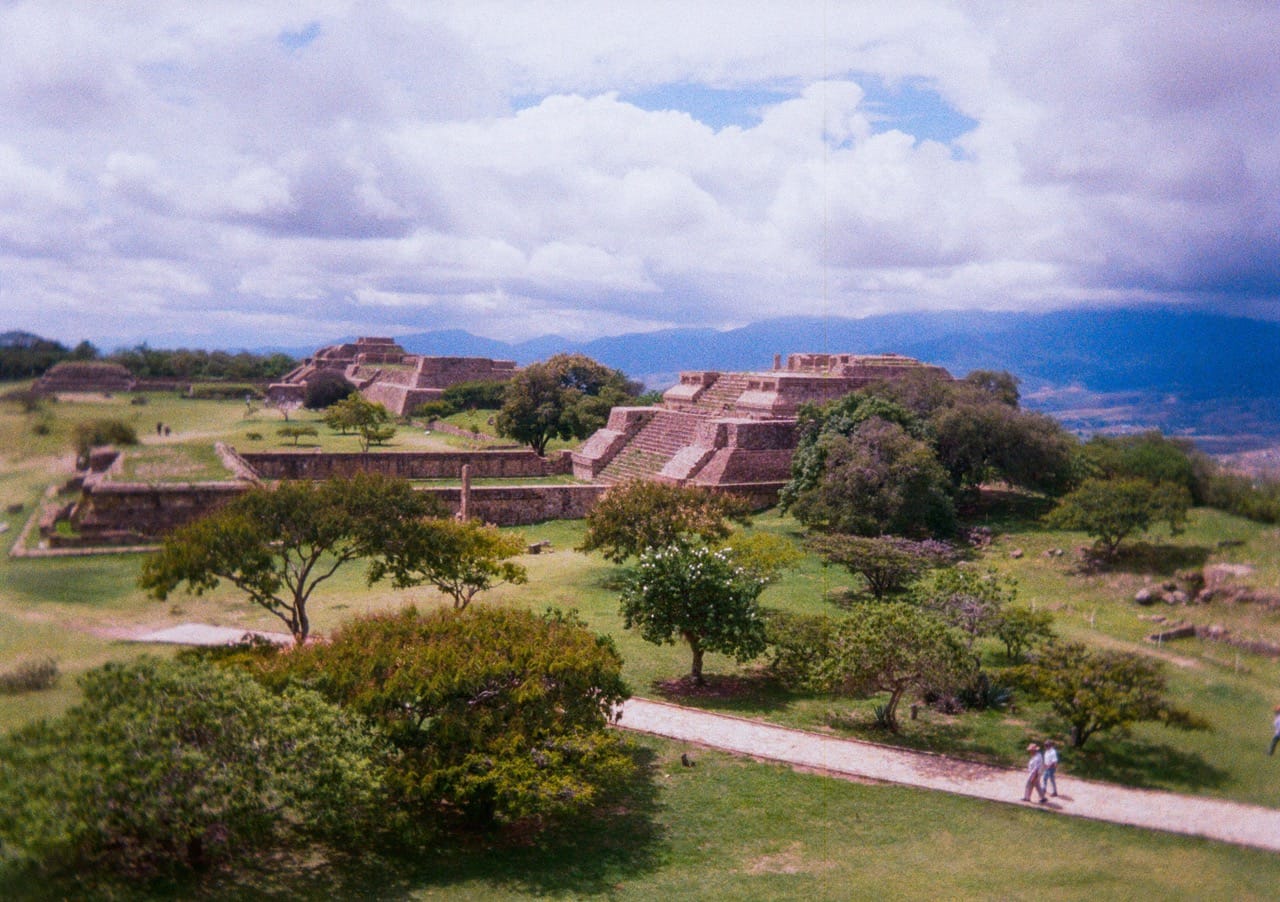
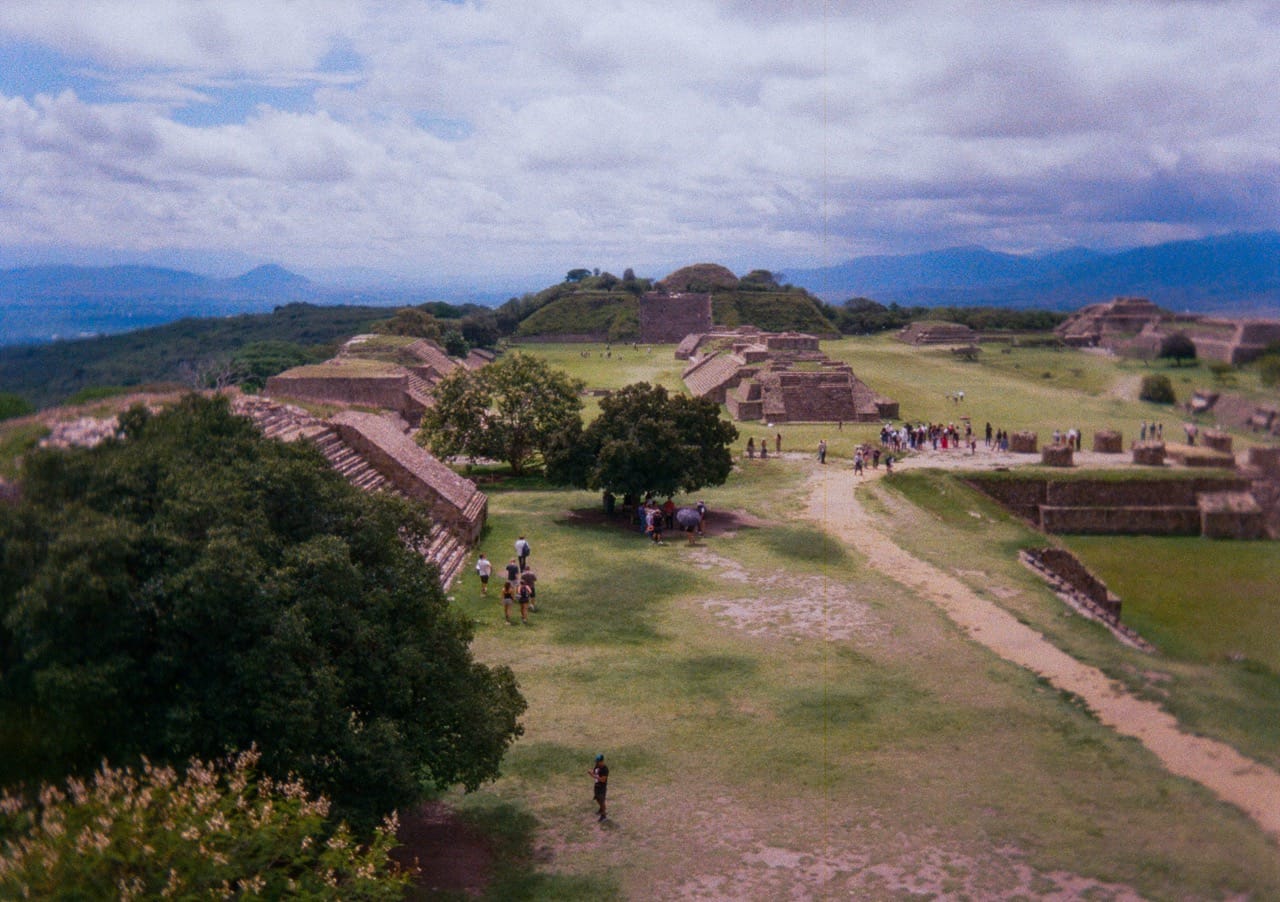
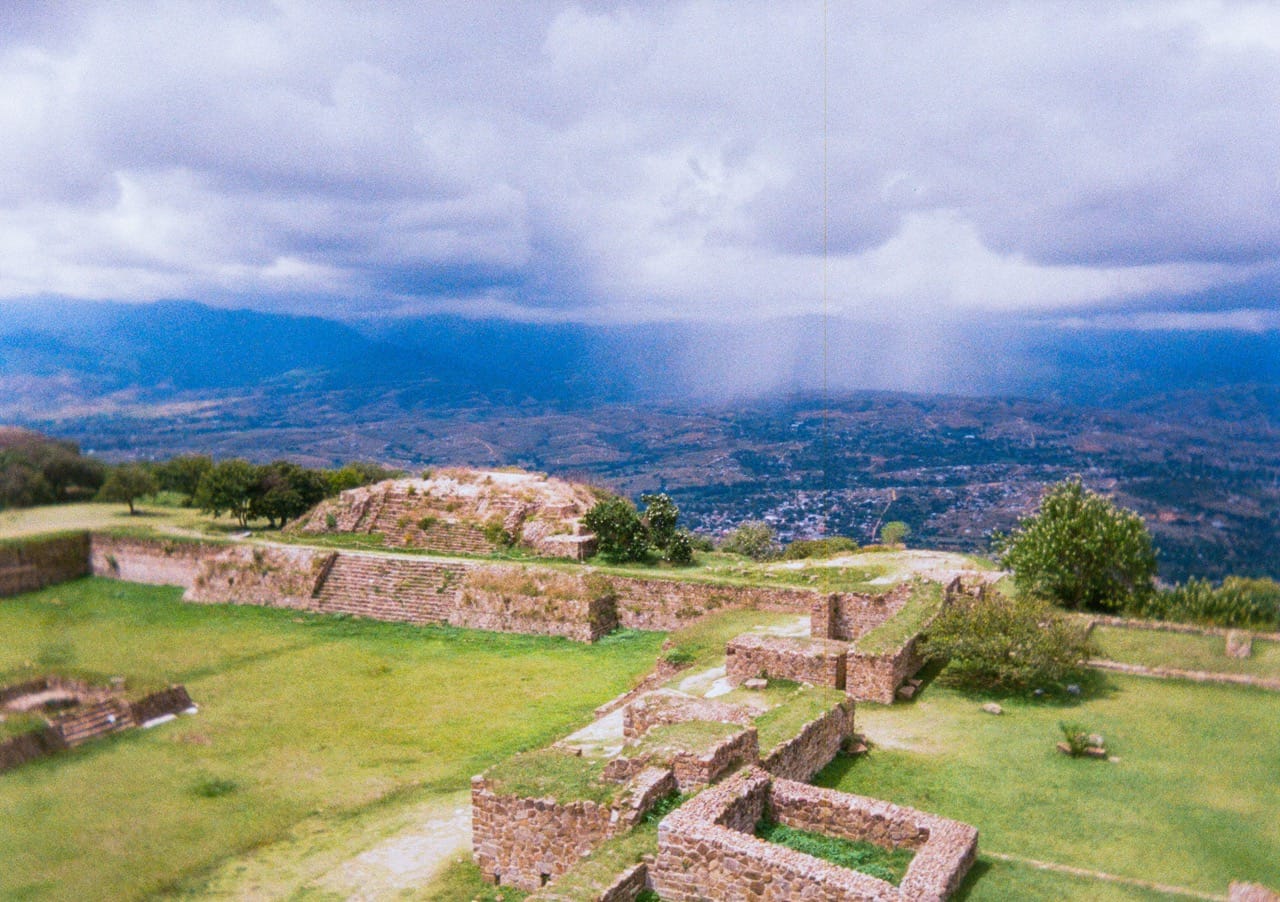
On the left is System IV only a few minutes after the black-and-white shot above
Eventually the rain came closer, and I went poking around the visitor’s center while waiting for the van back. There’s a little museum in there, and an overpriced cafe. I bought a couple postcards from the gift shop, and felt a bit like I was returning to the present against my will. On the drive back down the mountain, entering the city of Oaxaca again, I caught myself wishing I could come back and visit again in another two thousand years, just to see if standing in Monte Albán would still feel the same.
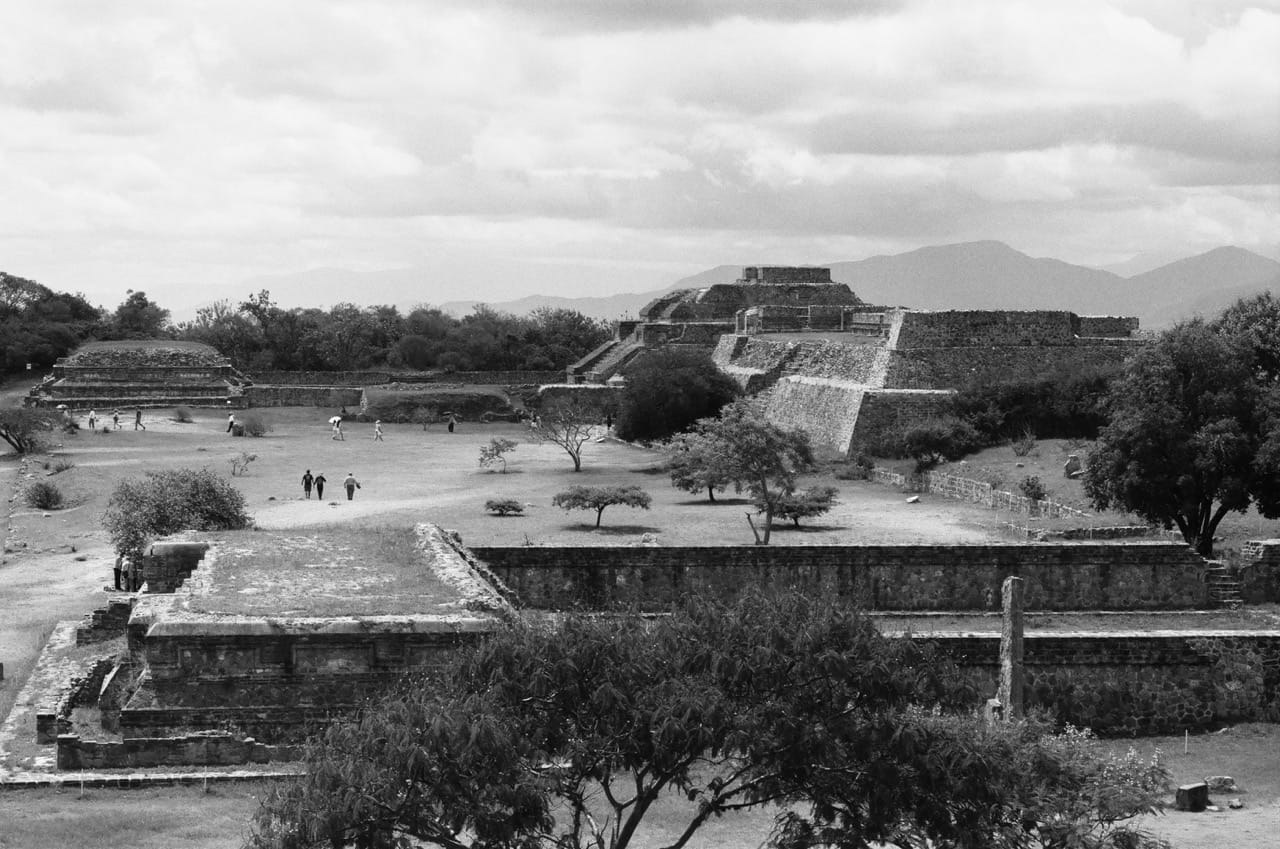
Thanks for reading, and looking! All these photos were taken by me on 35mm film as mentioned above. They were developed and scanned by Foto Hercules of Mexico City, with minor brightness, contrast, cropping, and/or color adjustments by me. If you’d like to purchase prints of any of these images, contact me here or comment below. I’ll have more photos and stories from Oaxaca here in the coming weeks - subscribe to have a Dispatch sent to your email a few times a month summarizing the posts. Financial contributions are never expected, but always appreciated - thanks to my subscribers and supporters!
Member discussion